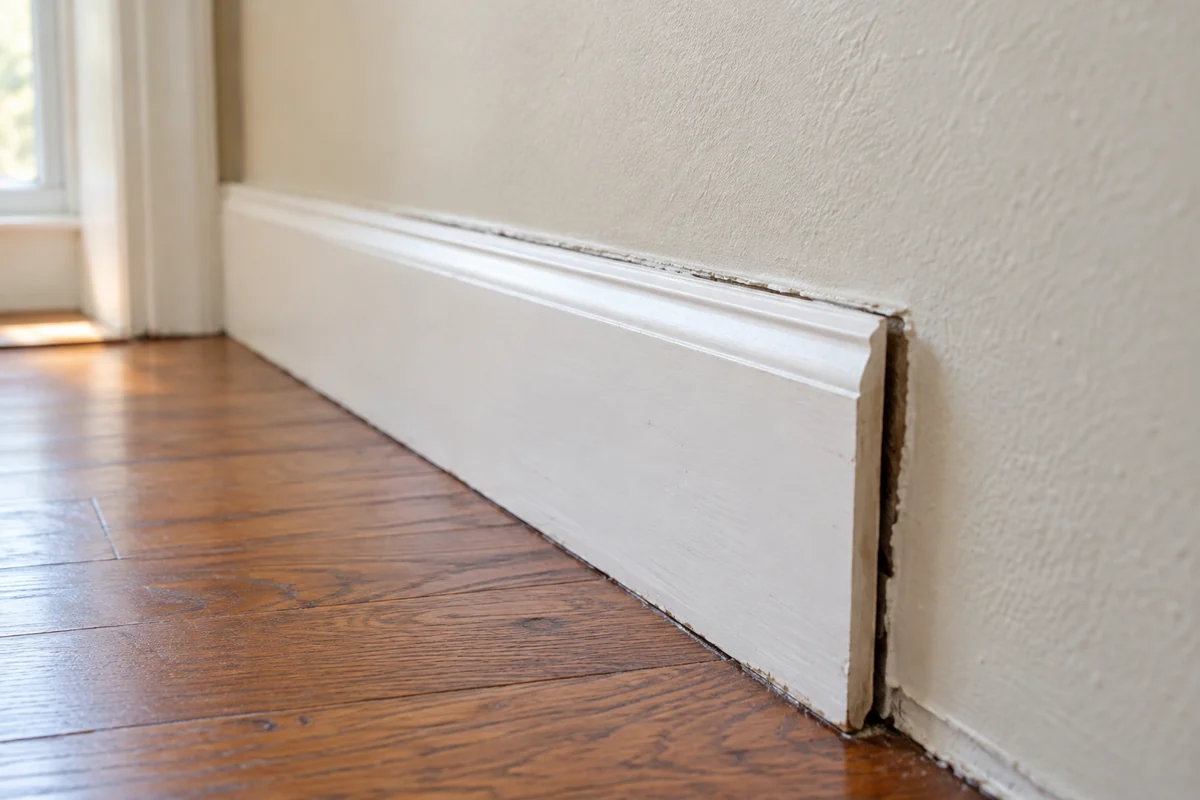
A new dark line above a baseboard is often described as cracked caulk. Sometimes the caulk is only reporting that the board has moved. Pressing it back and applying another bead may improve the appearance briefly while leaving the cause unchanged.
Inspect the run gently without forcing it. Note whether one end is loose, the middle bows away, or the entire length moves. Look for dampness, swelling, damaged wall material and changes at nearby joints. Keep a photograph of the condition before any repair.
Check the fixing and the backing
The fasteners may not be holding in suitable backing, the adhesive may have released, or the coating beneath an adhesive may have separated. A warped board can also exert continuing force on an otherwise reasonable connection. These possibilities require different remedies.
Do not add nails blindly through the face. The correct repair needs appropriate backing and a safe location clear of concealed services. A longer fastener is not automatically a better solution, particularly near electrical or plumbing routes.
If adhesive was part of the installation, identify the failure surface. Paint stuck to the back of the board suggests a different problem from clean adhesive release from the molding. Reapplying glue over loose layers can reproduce the same weakness.
Look for a changing environment
Wood-based materials can respond to moisture conditions. A recurring seasonal gap may deserve observation, while sudden movement with staining or softness needs prompt investigation. Trim should not be used to hide an active leak or damaged wall.
For old painted assemblies, lead assessment may be necessary before removal or surface preparation. Keep uncertain coatings undisturbed until the appropriate process is established. A minor-looking baseboard repair can still create contaminated dust if approached casually.
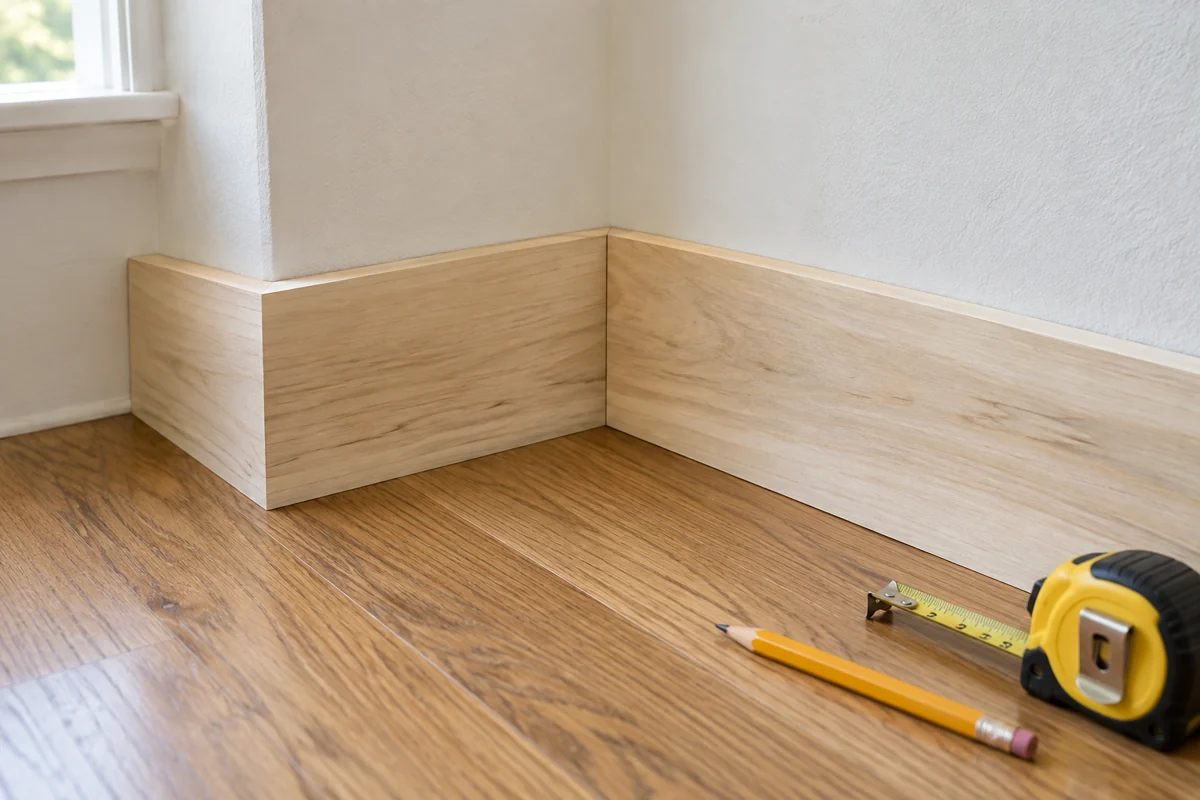
Once the underlying condition is understood, have the board refitted or replaced and secured using the correct product system. Dry-fit the entire run and its ends so that the repair does not solve the middle while opening a corner.
Only then address the top seam and finish. Use a compatible product within its stated joint limits, and let it reach the required stage before painting. Inspect from the room's normal viewing positions after the coating settles.
A successful repair leaves the baseboard stable without depending on the caulk to hold it in place. The seam should be the final finishing detail, not the main attachment keeping the board against the wall.