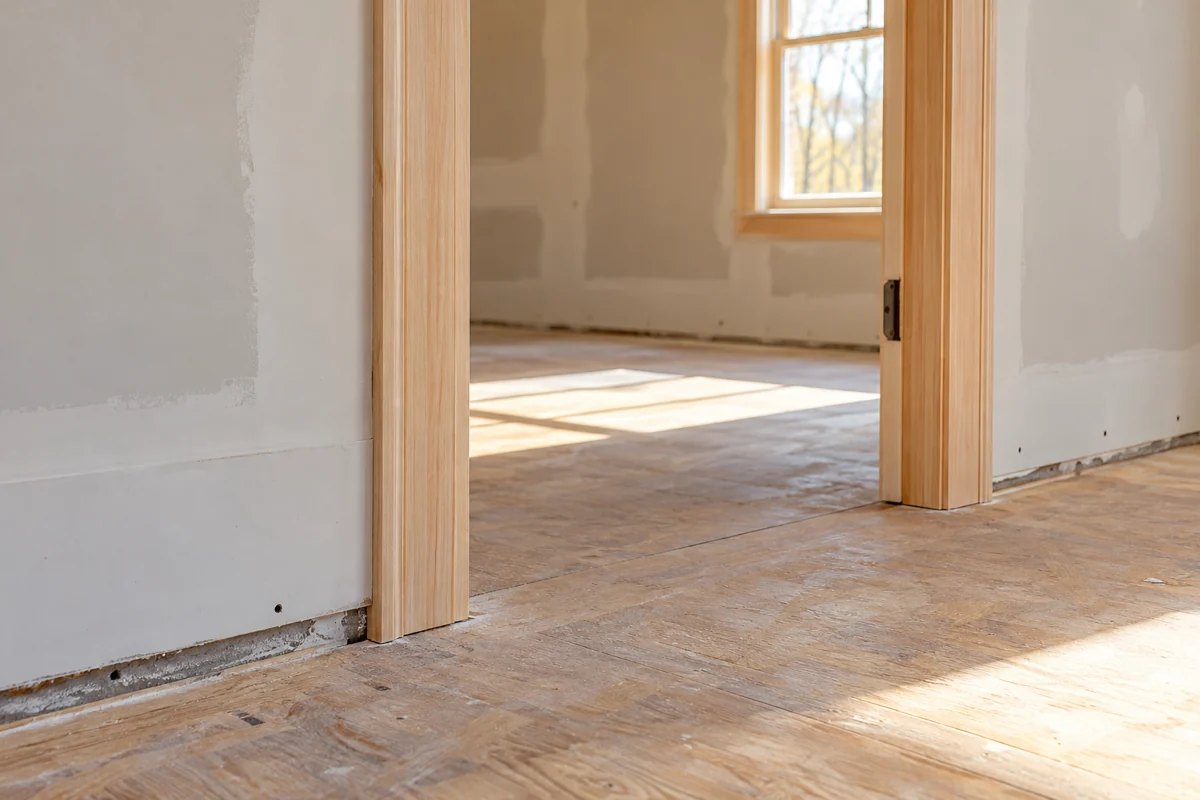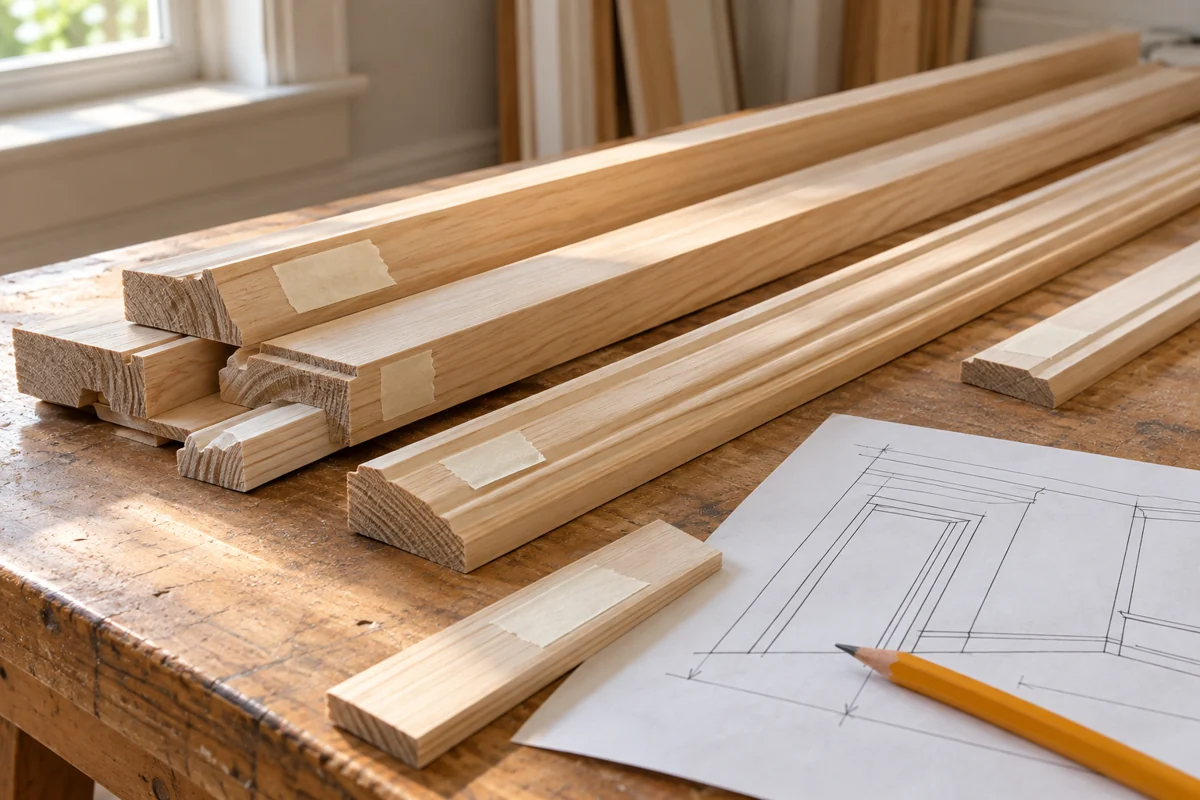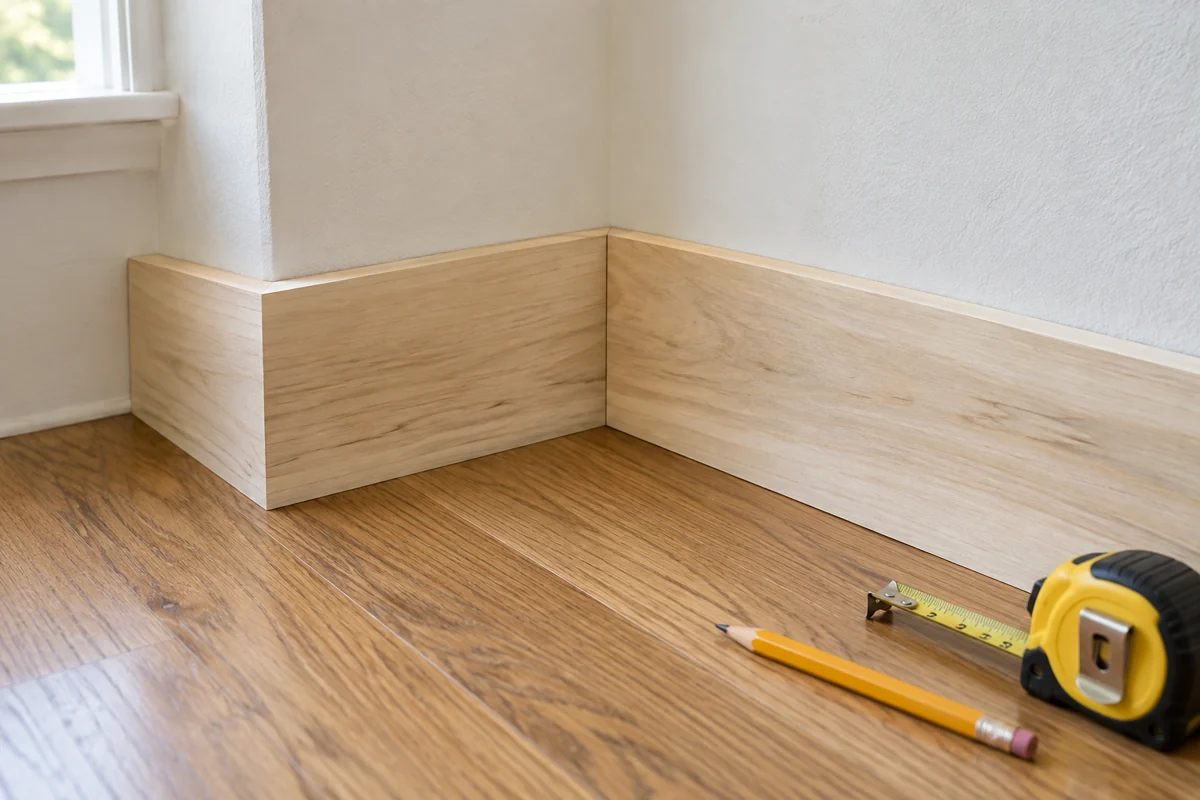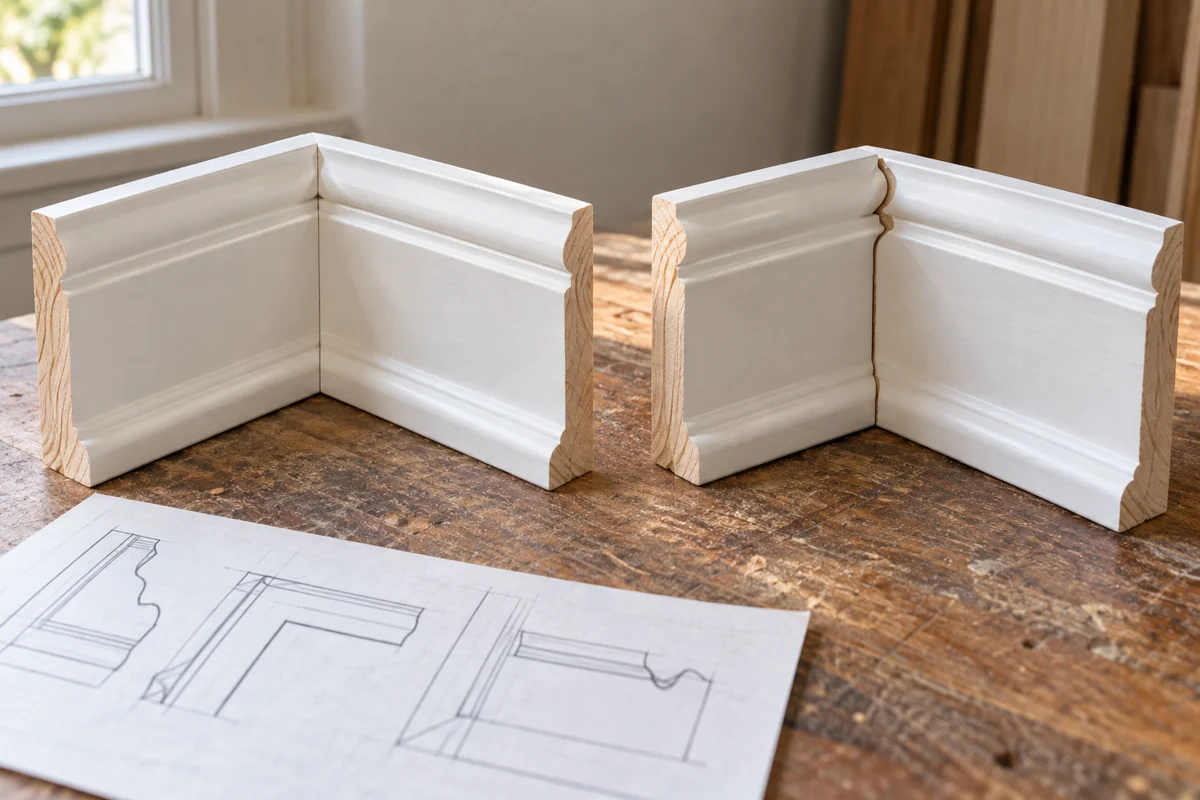
At an inside corner, two common approaches meet the molding in different ways. A miter divides the corner between angled ends. A coped joint shapes one end to follow the face of the adjoining piece. The distinction matters more than the claim that one method is always more professional.
For some traditional wood profiles, coping can make the visible meeting less dependent on two precisely matched angled faces. It still requires sound material, an accurate profile and proper seating. It will not make a bowed wall or damaged board disappear.
Let the material narrow the choice
A thin, brittle or manufactured profile may not tolerate the same shaping as solid wood. Some systems specify glued miters, special connectors or particular fillers. Prefinished trim can also make exposed cut edges more difficult to conceal. Read those requirements before deciding based on a technique used successfully on another project.
For stained wood, the visible end and grain deserve attention. A small mismatch can remain noticeable after a clear finish, and a filler repair may absorb stain differently. Make a finished sample if the junction will be prominent.
Check fit in the room
A sample joint on a flat bench is only the beginning. Place it against the actual wall at the intended height. Check both pieces' orientation, the floor relationship and the entire profile. A joint that closes only when one piece is tilted is not yet a reliable fit.
Inside corners are not necessarily identical around the room. Label successful samples for their locations and avoid carrying an unverified cut setting from one corner to the next. Long pieces also need a complete dry fit because their far ends can affect how they sit.
If an installer is doing the work, ask which detail is planned and why it suits the material. A clear explanation and a good sample are more useful than insisting on a particular word in the estimate. Include any unusual finish or prefinished product in that conversation.
Small finishing gaps may be addressed with a compatible system after the pieces are fitted and secured. A broad opening or a joint under visible strain needs correction first. Neither coping nor mitering should become a cover story for a poorly seated board.
The room will be judged by its finished edges, not by a hidden checklist of techniques. Choose a method that can be executed safely, preserves the profile and respects the product's instructions, then use consistent dry fitting to make the result repeatable.