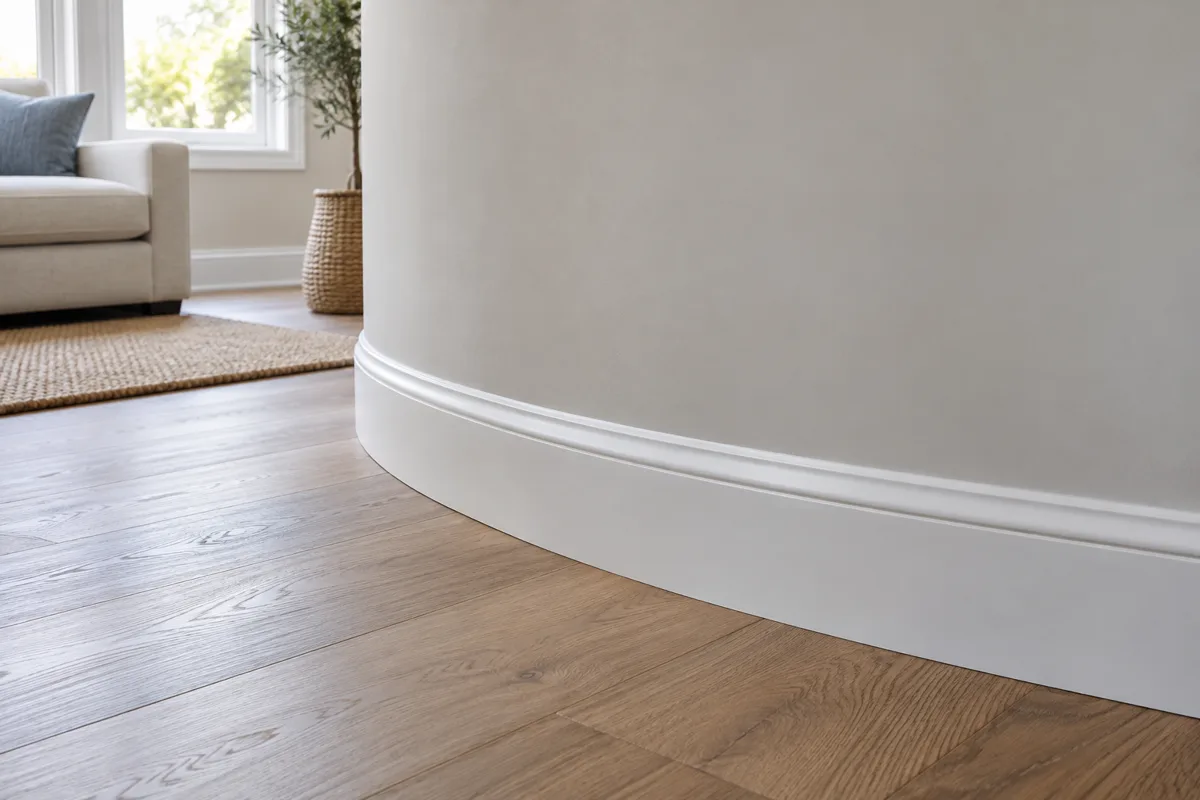
A curved bay or rounded wall can turn an ordinary baseboard order into a special one. Flexible molding offers an alternative to trying to force a rigid piece into a shape it was never intended to take. The ordering details matter, because a profile that bends comfortably one way may not suit another orientation or a tighter curve.
Begin with a drawing that shows the curve and the proposed molding position. Ask the supplier what measurements it needs, whether the material must be supplied for a particular radius, and which profile matches the straight sections nearby. A photograph is helpful context, but it does not replace dimensions.
Check the transition to straight trim
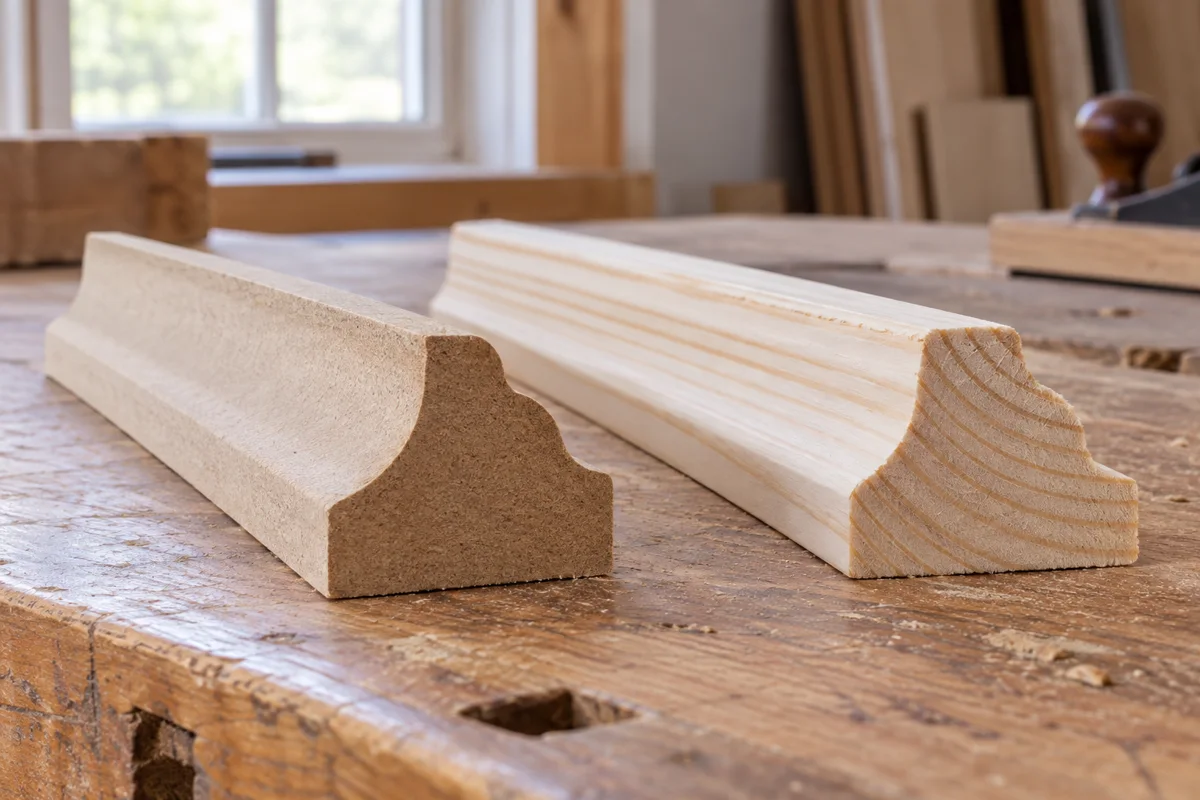
Place actual samples together if possible. Matching profile names are less useful than matching the face contour and thickness. The junction between flexible and rigid material can become conspicuous if one has a sharper bead or a different projection.
Think about the finish as well. An opaque paint can unify color, but it will not hide a step in the shape. Stain-grade flexible products can have a molded grain that needs its own finishing process; sanding or reshaping that surface may damage the intended appearance.
Flexible material also follows irregularities in its backing. A lumpy wall can produce a lumpy-looking run even when the molding is capable of making the curve. Have the substrate assessed and prepared before expecting the trim to provide a smooth visual line.
Follow the flexible product's sequence
Do not transfer a rigid molding installation method automatically. Some flexible manufacturers specifically require painting or staining after installation because bending can fracture a finish applied beforehand. The adhesive, fastener locations and preparation steps should come from the instructions for the exact product.
A dry layout is particularly useful. It checks the curve, the ends and the adjacent pieces before permanent fixing. If the material resists the intended shape beyond its stated limits, stop and ask the supplier rather than adding more force or improvising a heating method.
Budget for the entire curved section, including matching straight pieces and finishing. Special material may be worthwhile for one prominent bay while unnecessary elsewhere in the room. Preserve the product information and a sample of the final coating for later repairs.
The best result looks ordinary in the finished room: the baseboard simply follows the wall. Getting there depends on treating the curve as a measured detail rather than hoping a product labeled flexible will fit any bend.