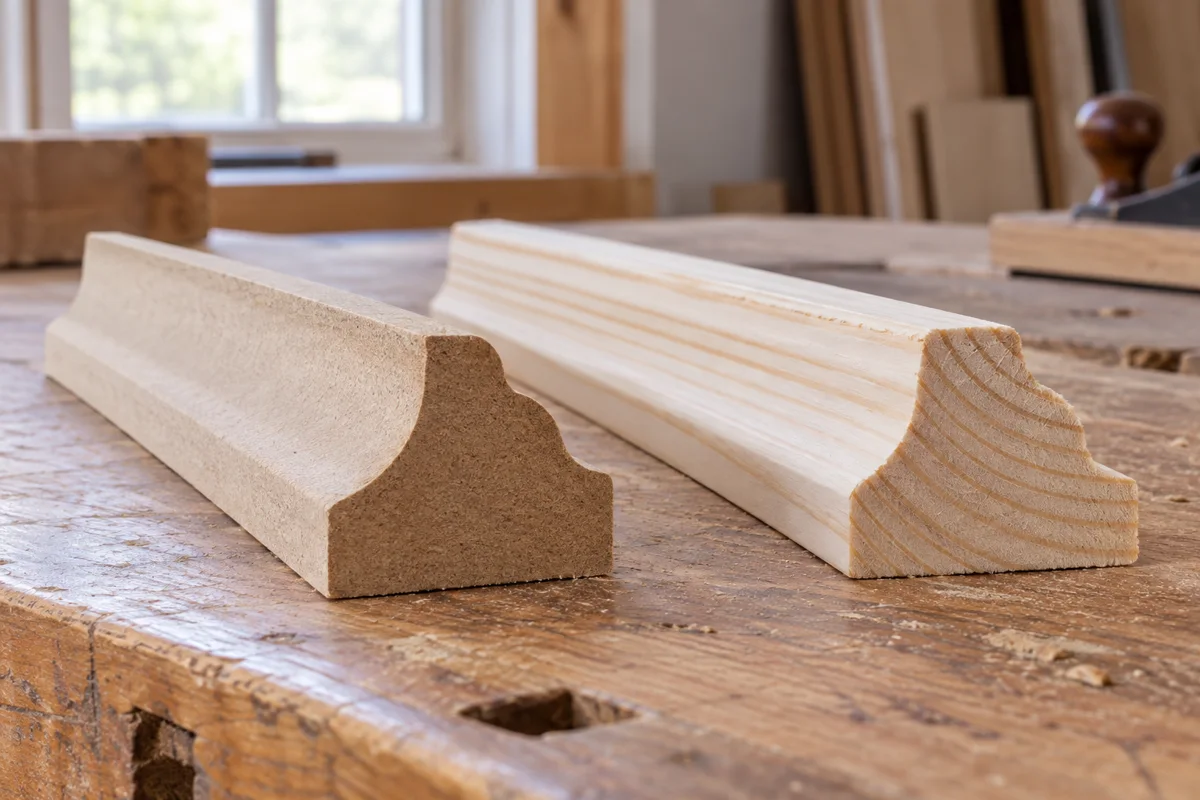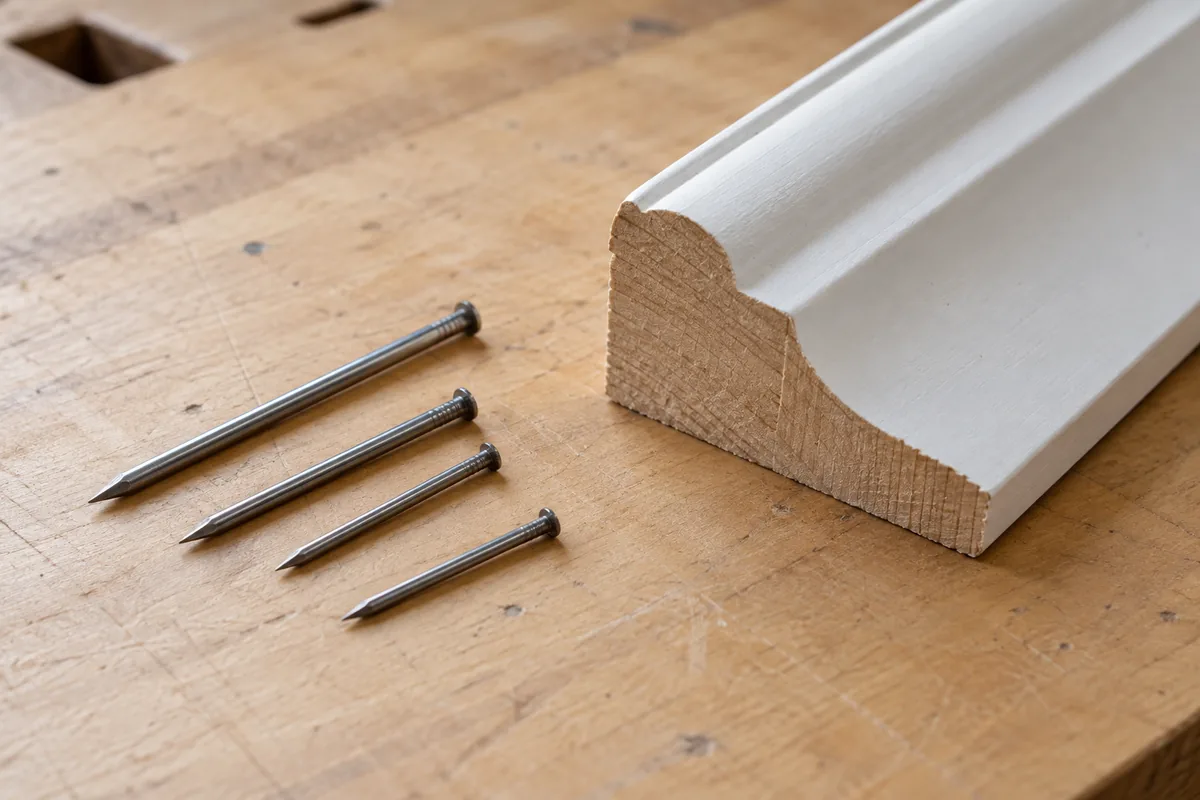
Trim fasteners are often described by their gauge and length, which can make the choice sound like a small shopping decision. The important question is what the fastener will pass through and what it will hold. A thin decorative strip, a thick casing and a synthetic molding can require different systems.
Start with the trim manufacturer's instructions and the installer's assessment of the backing. The required hold must come from a suitable substrate, not merely from passing through the visible drywall. At the same time, a longer fastener can reach concealed pipes or cables. More penetration is not automatically better.
Plan before choosing the box
Identify the molding material, its thickness at the intended fixing location, the wall assembly and any restrictions near edges. A small head may leave a less visible mark but offer a different type of hold than a larger fastener. Brittle or thin profiles can split or distort if the fixing method is unsuitable.
If the product requires screws, proprietary clips, adhesive in combination with fasteners, or another specified method, do not replace that system with finish nails simply because the nail holes are smaller. The instruction applies to the assembly, not just its appearance.
Concealed-service risk needs particular attention around outlets, plumbing fixtures and routes where pipes or cables may run. A stud finder is not a guarantee that a fastening location is clear. Have uncertain areas assessed rather than driving a test fastener to find out.
Treat the tool as a separate decision
A pneumatic or powered nailer needs appropriate training, the correct compatible fasteners and the manufacturer's operating instructions. This is not a tool to learn by copying a picture of someone holding trim. OSHA identifies serious nail-gun injury hazards, including unintended discharge and fasteners traveling unexpectedly.
For a small job, a competent installer may choose a method that does not involve a powered nailer. The suitable choice depends on the material and conditions. Finish quality alone is not enough to select a tool.
Before production work begins, test the complete approved method on suitable scrap or a safe mockup. Check for splitting, surface damage and a head depth that can be finished without weakening the profile. This test should not involve an unknown wall cavity.
Record what was used, including material and backing, rather than saving only a loose nail. That information makes a future repair more meaningful and prevents an apparently matching fastener from being used in a different assembly without thought.