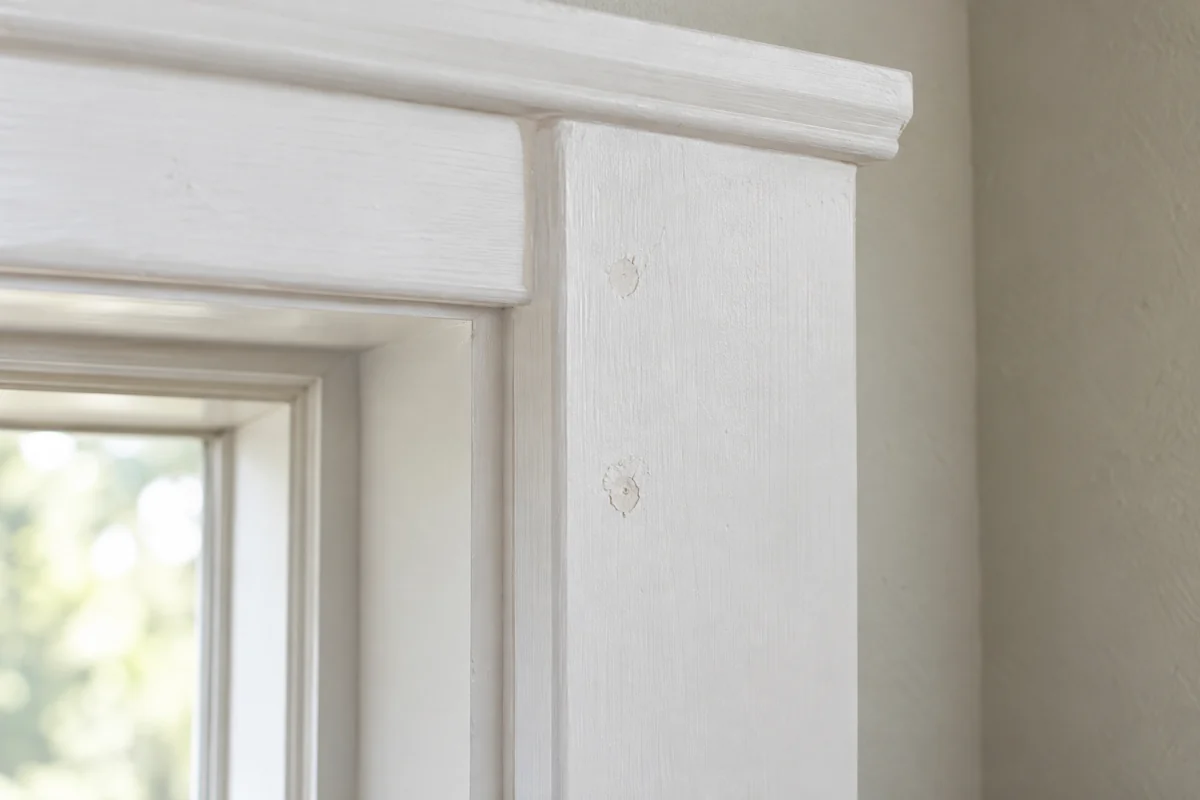
A finish-nail hole seems too small to deserve a plan. Across a long baseboard, however, a series of poorly finished holes can make a dotted line that catches side light. The repair has three jobs: fill the depression, keep the face level and receive the coating consistently.
First confirm that the fasteners and trim are secure and correctly installed. A proud or moving fastener is not just a filling problem. Have installation issues corrected using the appropriate method before cosmetic work begins.
Match the filler to the surface
Use a product suited to the trim material, hole size and intended finish. A paint-grade wood repair and a prefinished molding may call for different products. Ask the supplier about a matching repair system when the factory surface is meant to remain visible.
For stained wood, test color through the full finishing sequence. A filler described as stainable can still look different from the surrounding grain. The best-looking color before clear coat may not remain the best match afterward.
Follow the application and drying instructions rather than treating a small hole as exempt from them. Shrinkage can leave a slight hollow; overfilling without careful leveling can leave a bump. Both become more obvious under a reflective paint.
Keep the repair local
Preserve the surrounding profile while leveling the patch. Broad, aggressive sanding can turn a tiny depression into a wide change in surface texture. Old or uncertain coatings need lead assessment before any disturbance, even when the visible repair is small.
Inspect along the trim with light falling across it. Check for a ridge, hollow or residue around the hole. Remove dust using a method appropriate to the material and coating system, without introducing oily or incompatible residue.
Apply any required primer or sealer to control absorption. Paint alone may leave a dull or shiny spot over an otherwise flush repair. When many holes are present, the planned overall finish coat often gives a more consistent result than numerous isolated touch-ups.
Let the final coating reach its specified condition before judging it or cleaning the area. Wet paint and partially cured paint can look different from the settled finish.
Keep the filler and coating information with the project records. A later small repair is easier when it can repeat a known compatible system. The successful nail-hole repair is modest: no oversized patch, no softened detail and no row of spots drawing attention to how the molding was attached.