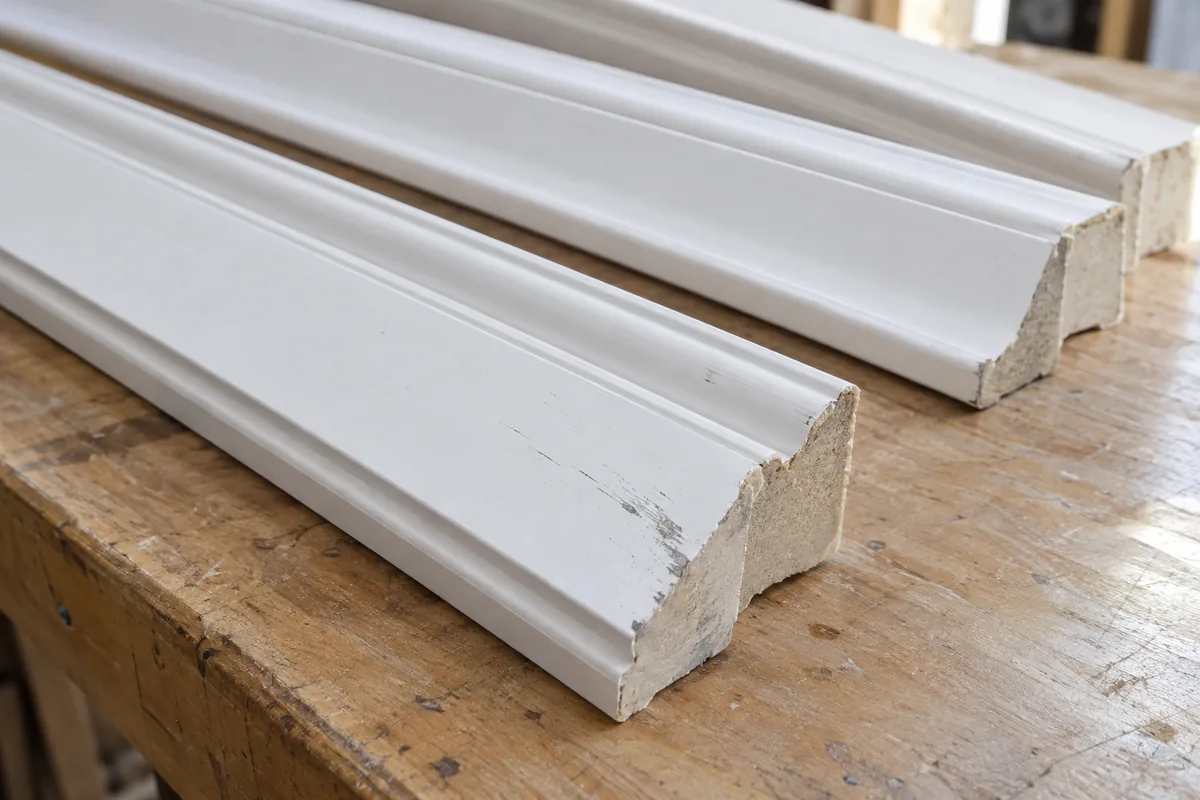
A white factory-primed board can look ready for the final coat while still carrying handling grime, scuffs and small surface defects. Treat the primer as a stage in the finish system, not as evidence that inspection is complete.
Check the manufacturer's instructions for the particular molding. Some products arrive with a primer intended to receive specified coatings; others are prefinished and should be handled differently. Confirm which you have before sanding or applying another material.
Inspect before installation
Lay the pieces on suitable supports and examine them under side light. Look for damaged edges, rough spots, open manufactured joints and areas where the primer is missing. Separate a small finish defect from a structural or material defect that deserves exchange or replacement.
Keep the boards clean during storage and handling. Stacking them face to face with grit between them can create scratches that were not present on delivery. Do not place a finished-looking face on a dirty bench and assume the final coat will hide the marks.
Cut ends and fitted areas expose new surfaces. Prepare and seal them as the product system requires, paying particular attention to moisture-sensitive edges. A primer on the original face does not automatically protect a newly cut end.
Make repairs compatible
Use fillers and caulks appropriate to the material and planned finish. Let them reach the required stage before coating. A patch that appears smooth while damp can shrink or show a different texture later.
Any abrasive preparation should follow the manufacturer's guidance and preserve the profile. Avoid rounding crisp details or removing a specialty surface unintentionally. If the material or coating is older or of uncertain origin, assess potential hazards before disturbance rather than assuming that white primer identifies a recent safe product.
Test the finish on a representative offcut, including a repaired or cut area. This shows whether the primer, repair materials and topcoat produce an even appearance together. One clean factory face alone cannot answer that question.
After fitting, inspect again for installation marks and joint conditions before the final coat. A board can be well prepared on the bench and acquire new damage while being handled around the room.
The factory has saved part of the preparation work, but the completed surface is still the responsibility of the full installation and finishing process. A short inspection at each transition usually prevents more trouble than adding another coat after defects have become visible across the room.