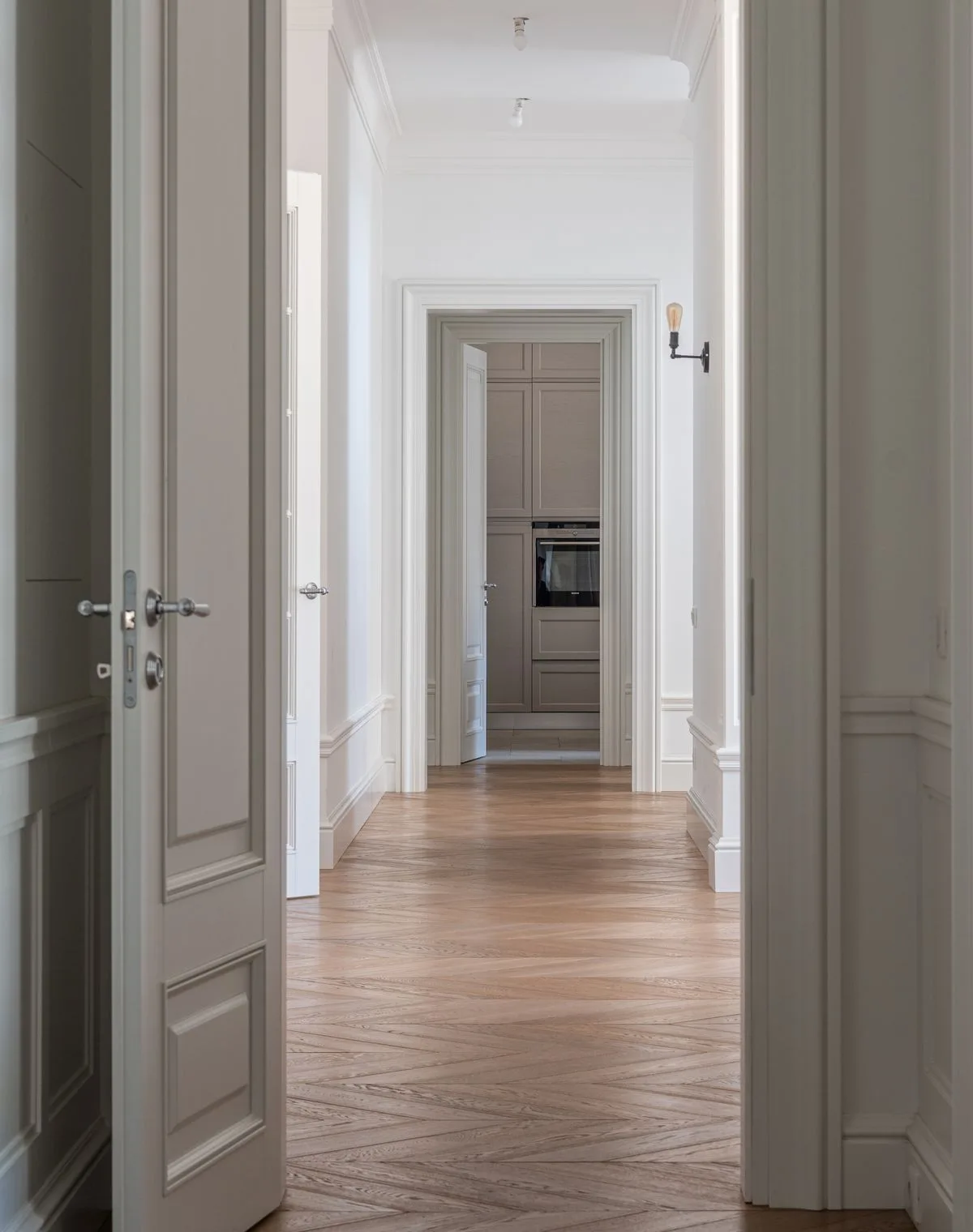
Dark trim is visually active even when the profile is plain. It can frame a view, emphasize a doorway or bring definition to a pale room. It can also turn a collection of small openings into a busy pattern if each one receives a strong outline without a larger plan.
Start with one representative opening. Consider the casing, door, hardware and baseboard together. A dark casing around a light door reads differently from an opening where both are dark. The decision should be visible in a mockup before it is repeated throughout the room.
Follow the dark line
Trace where the color would travel: around windows, down door legs and along the floor. Note where it stops at a cabinet, meets a stair or enters another room. A consistent termination is especially important because contrast makes an awkward end more noticeable.
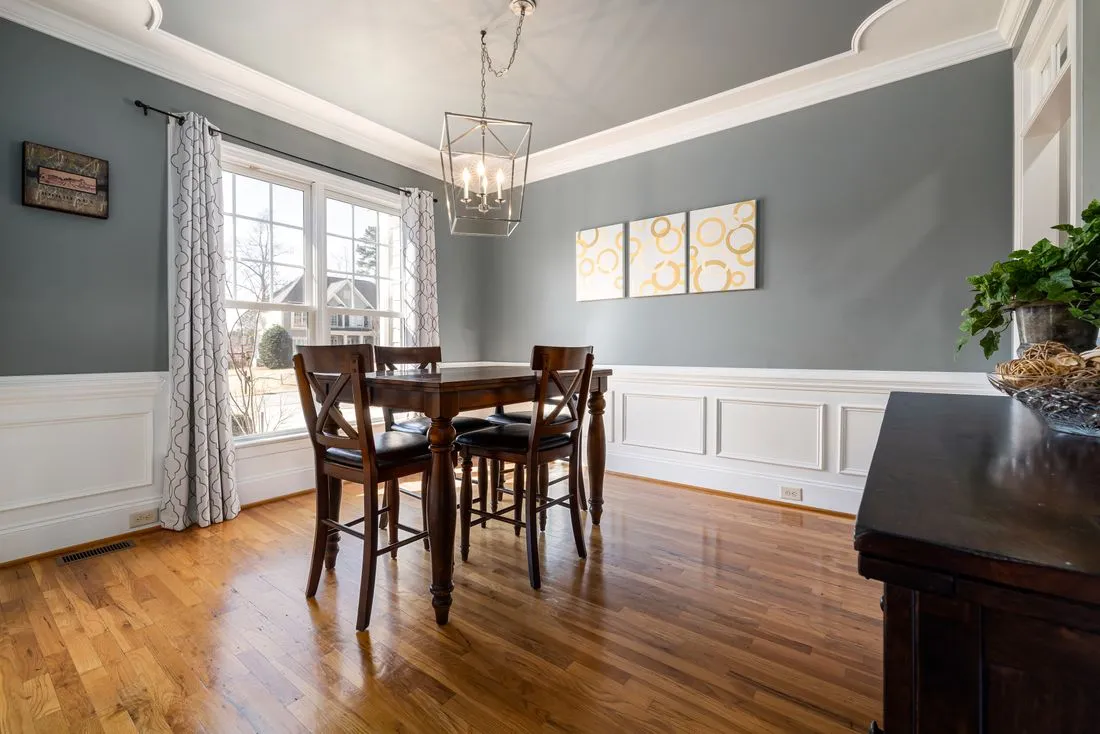
The surrounding wall color matters. A softer warm wall may make a charcoal look different from the same charcoal beside a crisp cool white. Flooring and metal finishes can either support the palette or introduce competing undertones.
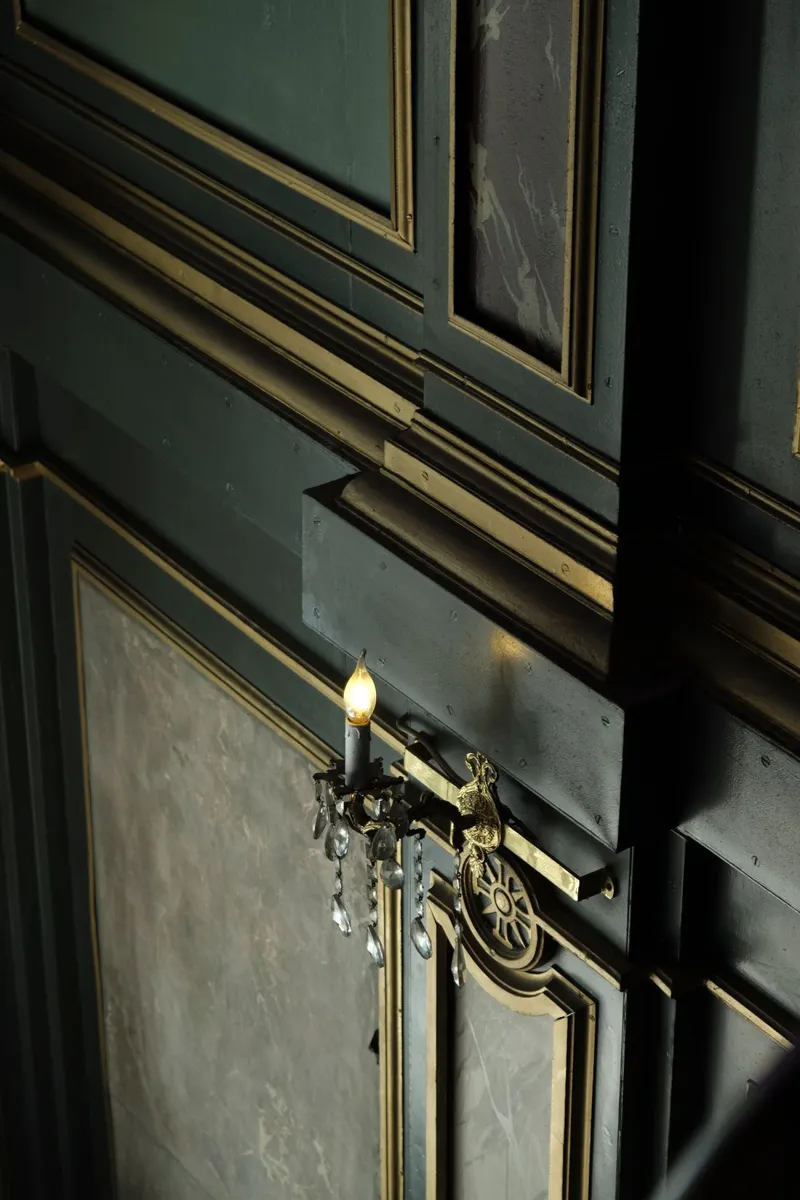
Try the actual coating and sheen on a profile. Dark glossy trim can show highlights and surface irregularities strongly; a lower-sheen product may produce a quieter effect if it is suitable for the use. Color alone does not determine durability or ease of maintenance.
Prepare for what contrast reveals
Nail-hole patches, ridges and uneven edges can become more visible when a dark finish catches light. Assess old coatings for lead concerns before preparation, then use a compatible repair and paint system. Do not expect extra finish coats to correct an uneven profile.
Choose a coating intended for the trim material and conditions. Synthetic products can have specific color restrictions related to heat exposure; an interior location near strong sunlight does not automatically remove those considerations. Check the manufacturer's guidance where relevant.
Think about later touch-ups. A fresh patch can differ in sheen from an aged dark surface even when the color is correct. Keeping the exact product information and a finished sample will help, and a complete logical section may sometimes need repainting for consistency.
View the proposed opening from the next room as well as from inside. The doorway belongs to both views. When the dark line has a clear route and a considered relationship to the door and wall, it can give a simple space definition without relying on a more elaborate molding profile.