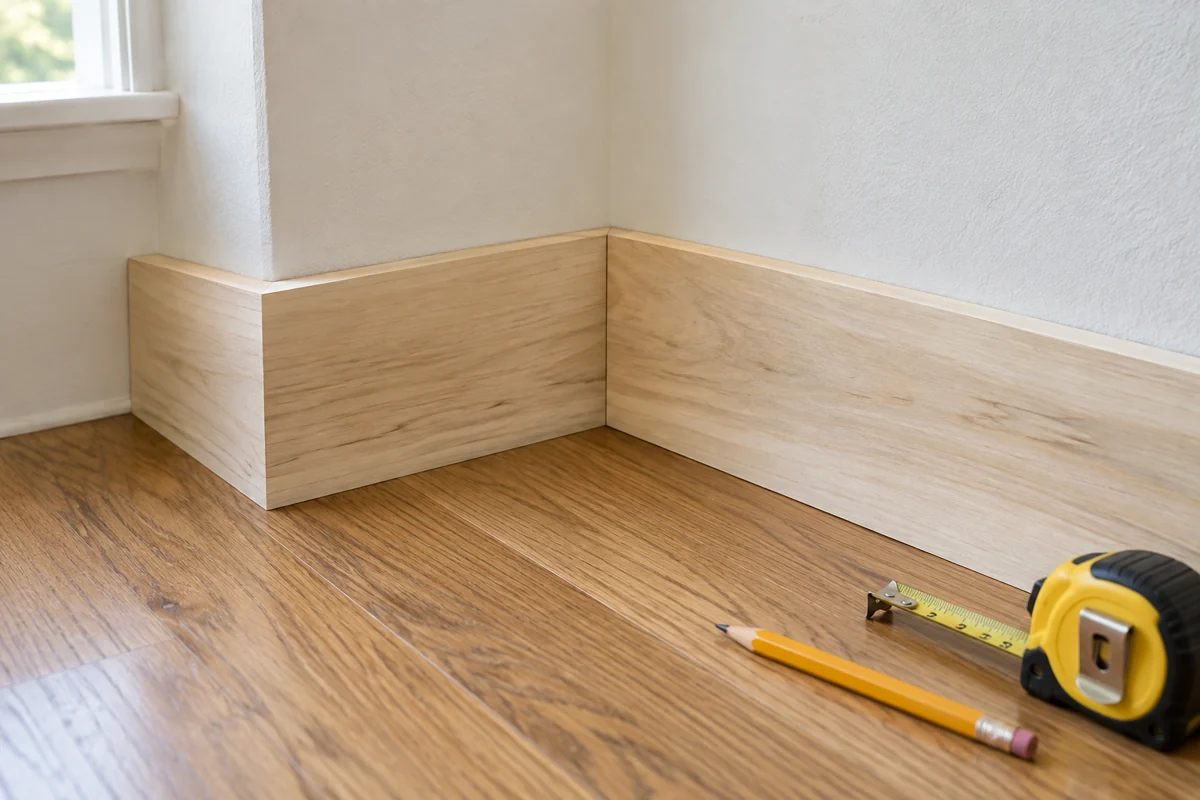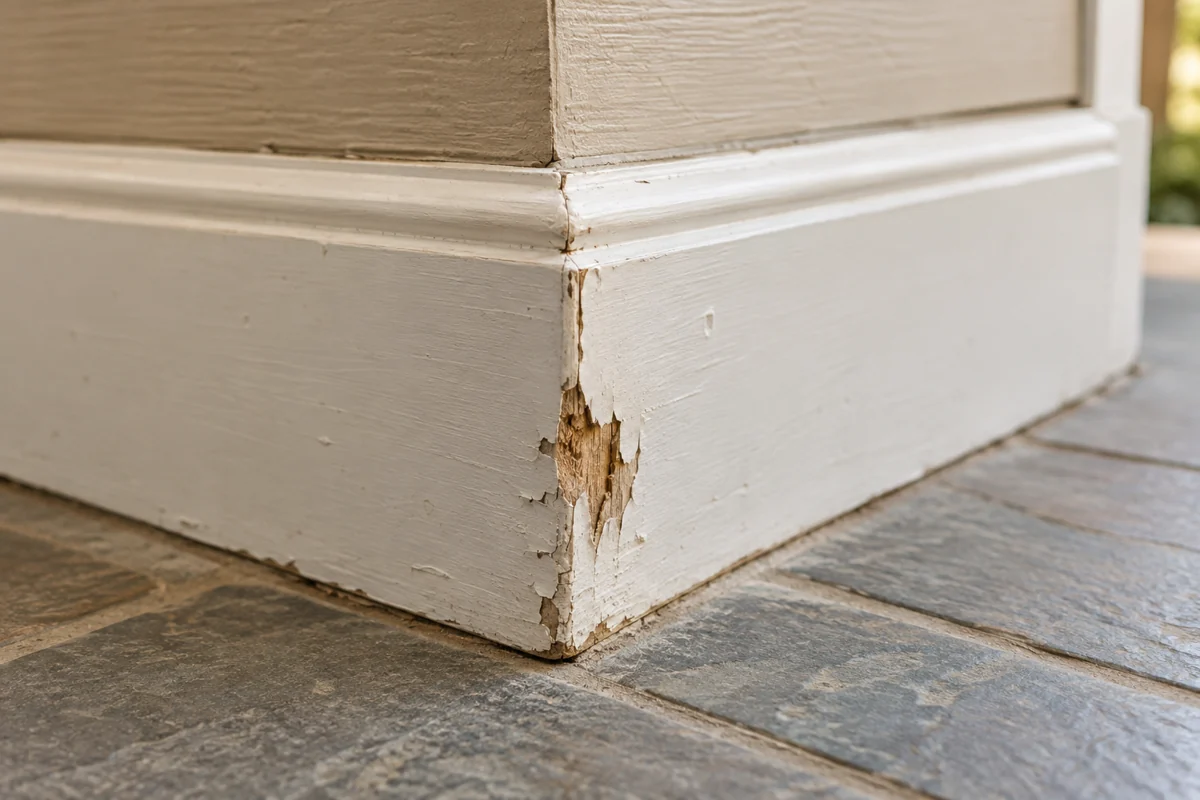
Outside baseboard corners live in the path of vacuum cleaners, shoes and furniture. A missing chip can be a local cosmetic issue, while an open or moving miter can indicate a joint that needs refitting. Distinguish the two before deciding how much of the corner to repair.
Look at both sides and the top edge. Check whether the pieces remain aligned and stable. If they move, have the fitting and attachment assessed first. A rigid patch over a shifting joint is likely to crack or separate.
Judge the missing shape
A shallow chip on a broad face may suit a compatible filler system. A missing thin bead or a large broken tip can be harder to reconstruct durably. The repair product must suit the trim material and the size of the defect; maximum strength on the label does not establish that fit.
For MDF or synthetic molding, follow the manufacturer's repair guidance. Do not assume a method for solid wood will behave the same way. On stained trim, a patch may remain visible because it lacks the surrounding grain even if its color is close.
Unknown old paint needs lead assessment before scraping, sanding or removal. Once safe preparation is established, keep the repair controlled so that intact profile details are not unnecessarily rounded off.
Know when a new section is cleaner
If the corner has been rebuilt several times, or the underlying material is unsound, replacing suitable lengths may produce a better result. Plan the new joints at deliberate locations and confirm that a matching profile is available before removal.
Consider the cause of repeated impact. Furniture placement, a door swing or a narrow circulation route may keep striking the same projection. A different compatible corner detail or a less fragile profile could make sense during a larger renovation. Avoid adding a bulky guard without checking how it meets the surrounding trim.
After shaping an accepted repair, inspect from both approaches to the corner. Side light reveals lumps that a front view can miss. Prime and finish according to the repair system, allowing the required time before the area is exposed to cleaning or impact.
Keep a matching offcut for future small repairs or replacement planning. A corner is not improved by making it unusually thick with filler; it is improved by restoring a sound, aligned profile and reducing the conditions that damaged it in the first place.