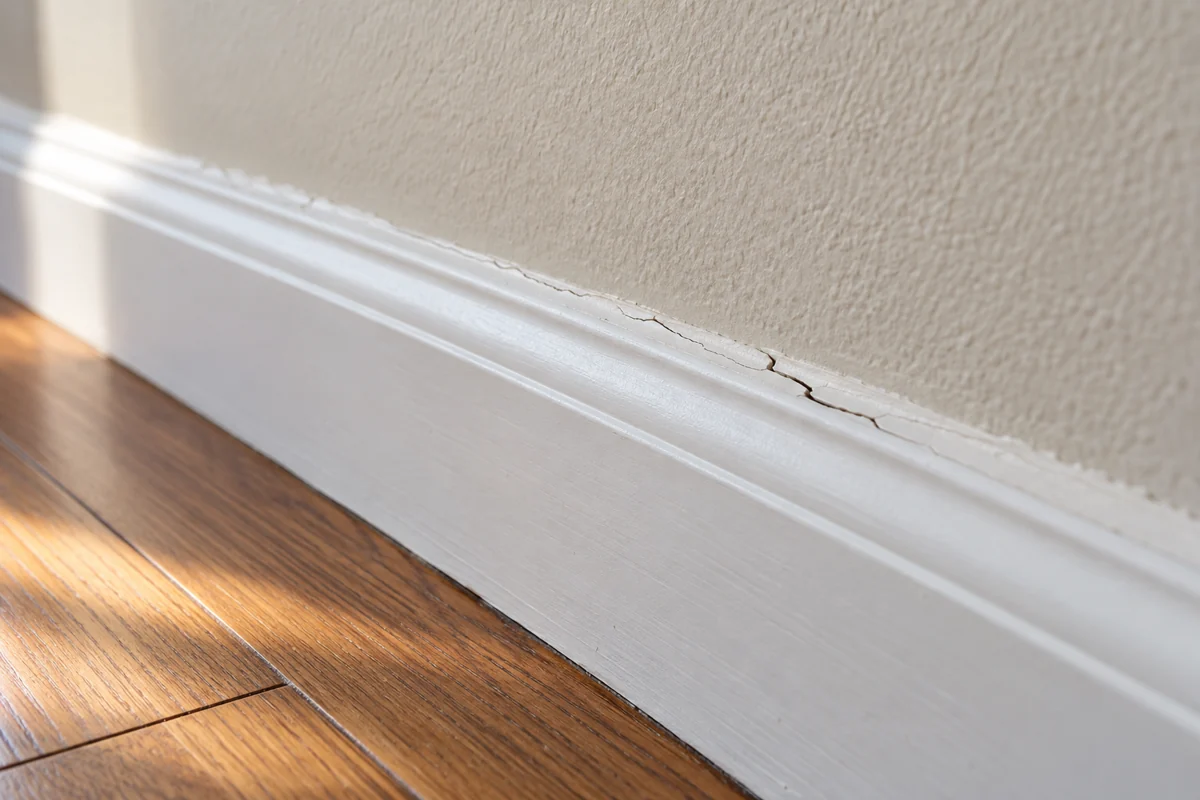
When the same caulk line cracks again, inspect the joint before replacing the bead. The crack may run through the caulk, separate along one edge or appear in the paint above it. Those patterns suggest different questions about movement, adhesion and finishing time.
Check whether the trim itself is stable. A board that pulls away from the wall asks the caulk to do attachment work it was not selected to do. Correct the fixing or fit before expecting a fresh seam to remain intact.
Look at the failed material
If the bead has detached cleanly from one side, consider contamination, loose paint or incompatibility with that surface. If it is deeply concave or split through its center, the joint size, application depth and drying behavior may need review. A cracked paint film can also reflect coating over a product before it was ready or using an incompatible coating.
Do not diagnose solely from color or a photograph. Identify the existing product if possible, and check the preparation, joint limits and painting instructions for the replacement. A product suitable for a narrow interior finishing seam may not suit a large moving gap or repeated wet exposure.
Avoid accumulating layers
Applying new caulk over loose, dirty or incompatible material can preserve the same weak connection. Preparation should follow the selected system and be carried out safely. Old painted trim may require lead assessment before scraping or sanding; do not treat the narrowness of the seam as an exemption from that concern.
A wide opening can be a fitting problem. Refitting or replacing a piece may produce a cleaner result than trying to shape a broad strip of sealant into a missing edge. Where a designed movement clearance exists, do not fill it without confirming the assembly permits it.
Allow the prescribed conditions and time before painting. Surface dryness is not a universal indication that the bead is ready for the next coating. Check the paint and caulk instructions together, especially when using products from different systems.
After the repair, watch the joint over time. If the same opening returns despite a sound application, investigate movement, moisture or backing condition rather than changing brands repeatedly.
A clean caulk line is a small finishing detail resting on several larger decisions. Stable trim, suitable surfaces, the right joint geometry and compatible coatings do most of the work. The bead should complete that preparation, not compensate for its absence.