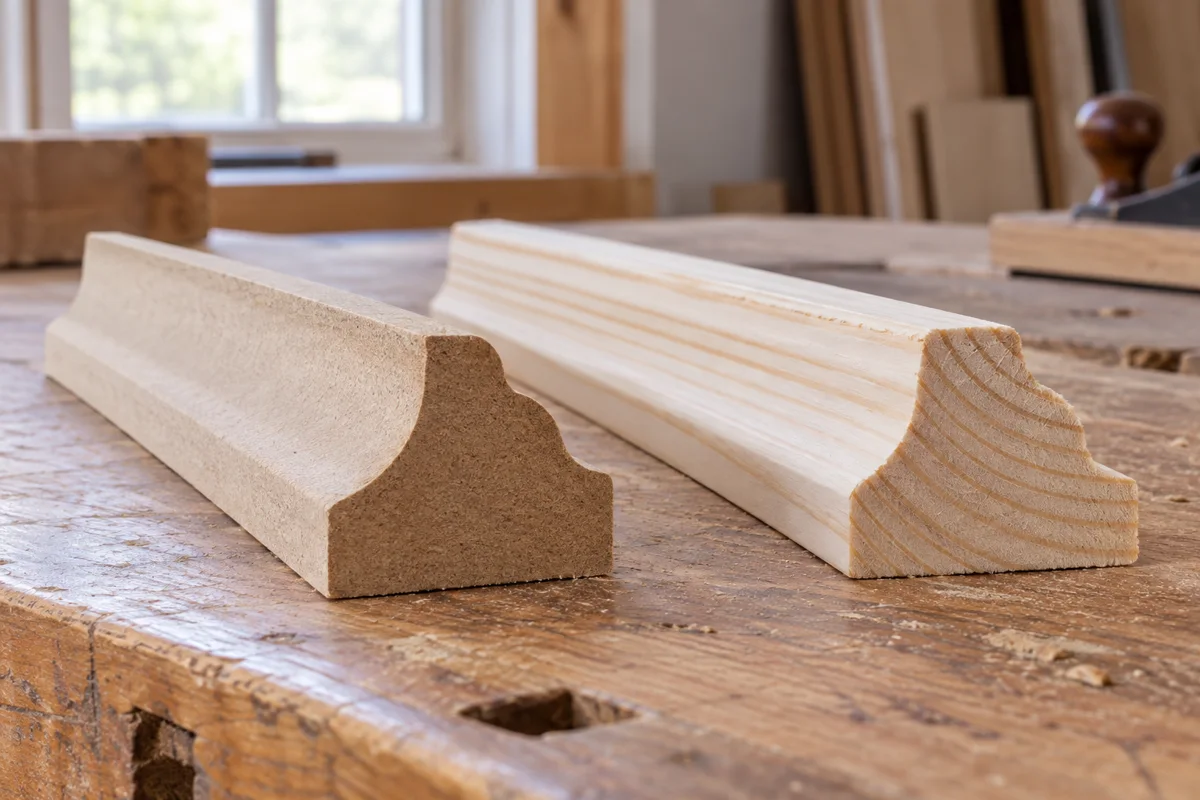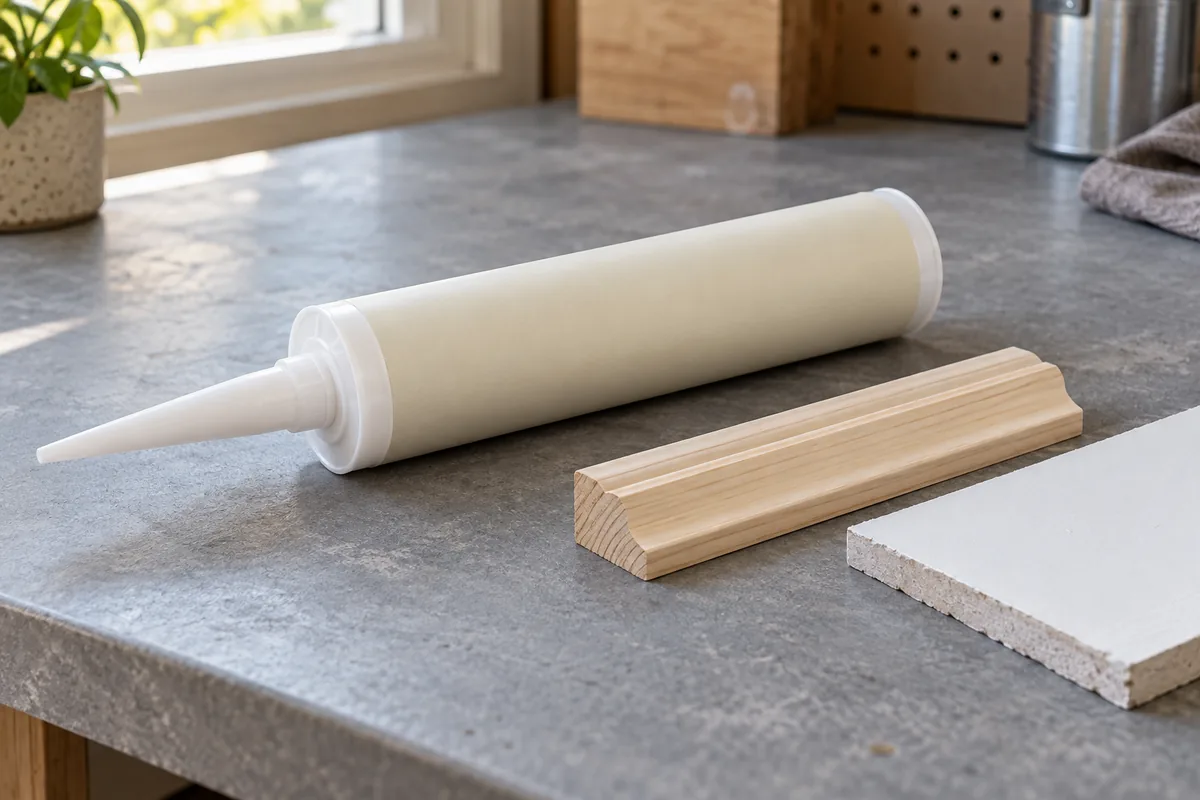
A tube labeled construction adhesive can sound like a universal answer. In a trim project, there are at least two separate questions: will it bond to the back of the molding, and will it bond to the actual wall surface? A strong connection to a weak paint layer may still fail when that paint separates from the wall.
Read the product information before buying enough for the room. Match the exact trim material and substrate, including any coating. A recommendation for bare wood and masonry does not necessarily cover a factory-primed synthetic molding on painted drywall.
Work through the assembly
First check the molding manufacturer's instructions. Some systems require adhesive and mechanical fastening together. Others specify a particular adhesive family or a different product for end joints. Do not assume one cartridge serves every connection.
Next consider the substrate. Chalky paint, wallpaper, loose plaster and dusty drywall are not simply alternative colors of the same sound backing. If the surface is unstable, preparation or repair is needed. Adding a larger bead does not make the weakest layer stronger.
Then check the room conditions and exposure. Application temperature, ventilation, moisture and curing requirements matter. “Instant grab” is not the same as full strength, and an initial hold does not prove the assembly can be left unsupported. Follow the stated temporary support requirements without improvising a setup that could fall onto people.
Notice what the label does not promise
A trim adhesive should not be assumed suitable for load-bearing construction, electrical fixtures or damp assemblies beyond its stated use. Decorative trim is not made structural by a high-strength marketing phrase. Nor should a flexible adhesive be expected to straighten a badly distorted board or bridge a deep void unless the product and system explicitly allow it.
Check cleanup before opening the cartridge. Some products need a particular cleaner, and that cleaner may affect the surrounding finish. Protect completed surfaces and test compatibility in an inconspicuous area. Never combine solvents or cleaning products in an attempt to remove a mistake faster.
A small offcut test can reveal obvious adhesion or staining problems, but it does not replace instructions or establish a load rating. Use it to confirm the proposed combination and appearance, not to invent a mounting method.
If removability matters, say so before installation. An adhesive suited to a durable bond may damage paint or drywall when removed. In a rental or temporary design, an apparently simple glued frame can carry a substantial restoration cost.
Keep the product name and technical information with the project notes. If a joint later opens, knowing what was used makes it possible to distinguish an adhesive issue from substrate failure, moisture movement or an installation that omitted required mechanical support.