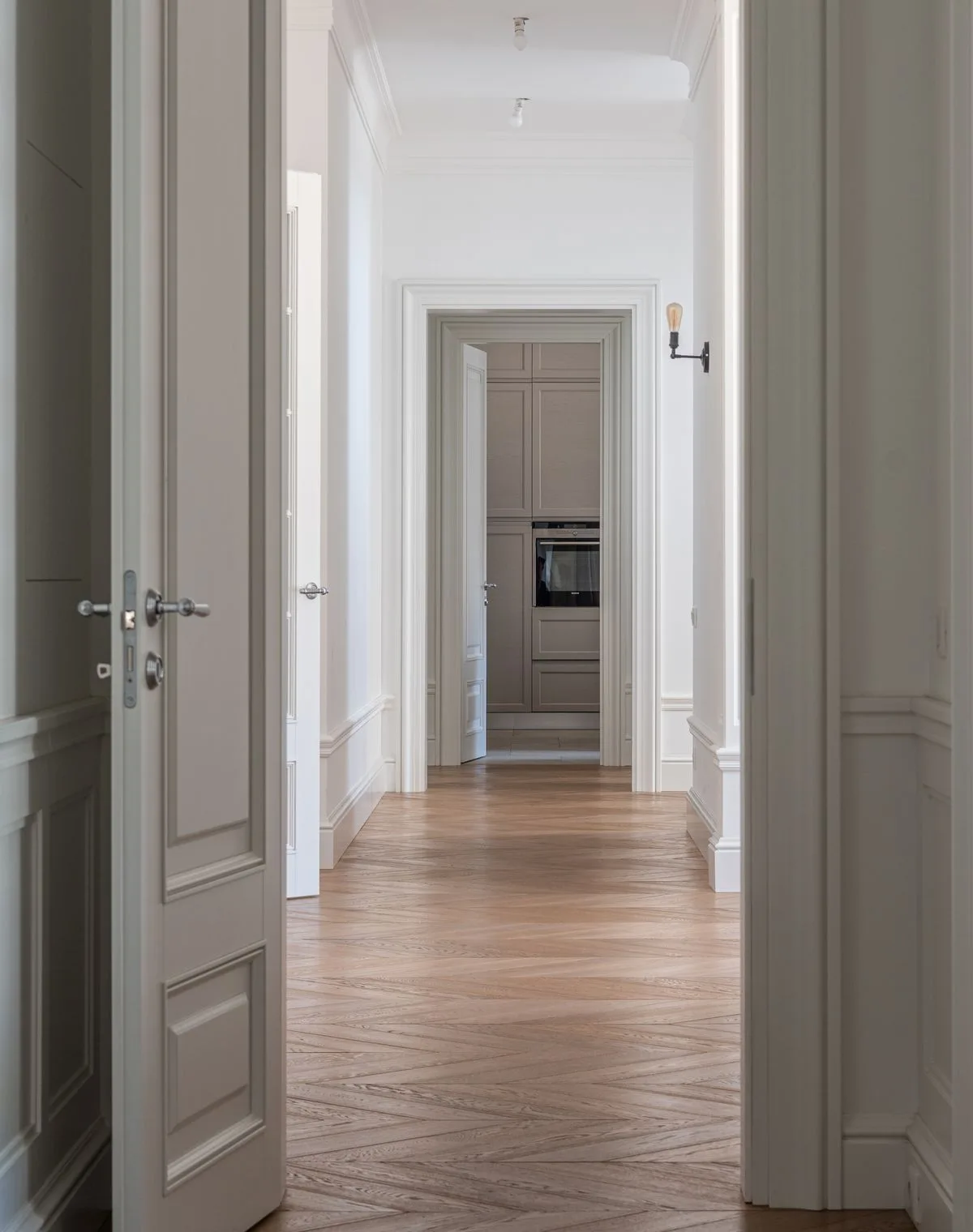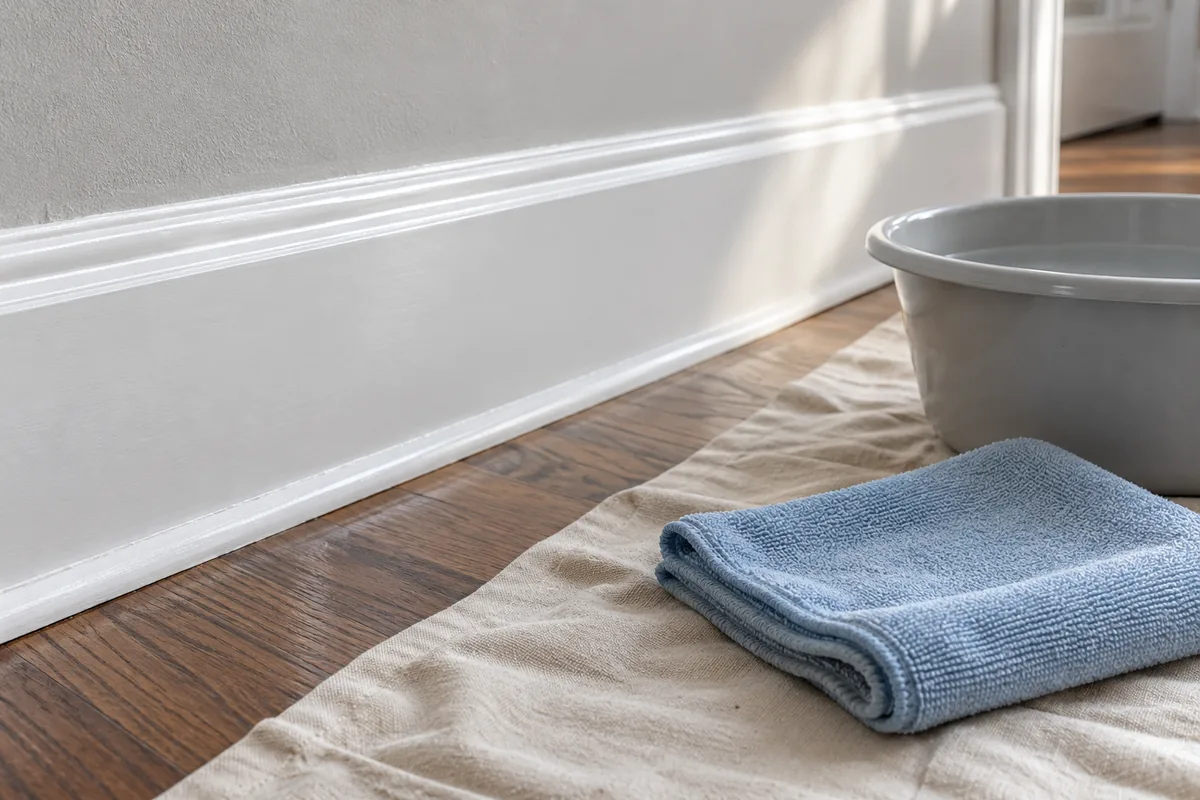
The gray line along a baseboard may be dust, a shoe mark, a worn coating or all three. Cleaning first prevents unnecessary repairs and gives the next coating a better chance of bonding to a sound surface. It should be a controlled preparation step, not a soaking exercise.
Identify the trim material and existing finish as far as possible. Follow the paint manufacturer's preparation guidance and use a cleaner compatible with the surface. A product suitable for a tiled floor may leave residue or damage a painted molding.
Start gently and inspect
Remove loose dust by an appropriate method, then test the cleaner in a discreet area. Avoid saturating MDF edges, open joints or damaged coatings. A wet surface can temporarily disguise defects and introduce moisture where it is least welcome.
Pay attention to high-contact locations: beside handles, near cooking areas and where furniture polish may have been used. Grease and wax are different from ordinary dust, and painting over them can create adhesion problems. Ask the coating supplier for a suitable preparation system when contamination is uncertain.
Do not mix cleaning chemicals. Follow ventilation, protection and disposal instructions, and keep the work area away from children and pets. More concentrated cleaner is not automatically more effective or safer for the coating.
Judge the surface after it dries
Allow the required drying period before inspecting and painting. Look for remaining discoloration, softened material, peeling edges and loose joints. Cleaning cannot restore a swollen core or secure a moving board. Those conditions need repair or investigation before finish work.
A cleaner may remove a superficial mark while revealing a dull patch where the coating has worn. That is useful information. It tells you that the next task is a finish repair rather than more scrubbing.
Old or unknown paint requires lead assessment before abrasive cleaning, sanding or scraping. Keep the process non-disruptive until the coating risk is understood, and follow appropriate guidance if hazardous paint is present.
If the chosen cleaner requires rinsing, do so as instructed without flooding the material. Residue left behind can matter even when the surface looks clean. Likewise, avoid using a cloth treatment that leaves oil or silicone beneath the new coating.
Once the trim is clean, dry and sound, make the repair and coating decisions. This order is less dramatic than reaching for sandpaper immediately, but it prevents a surprising amount of unnecessary work and helps separate a dirty surface from a damaged one.