A board that moves while it is being marked or cut turns an accurate measurement into an unreliable result. Long trim exaggerates the problem: the part on the bench can look settled while an unsupported end twists the piece. The support arrangement deserves planning before the first full length is handled.
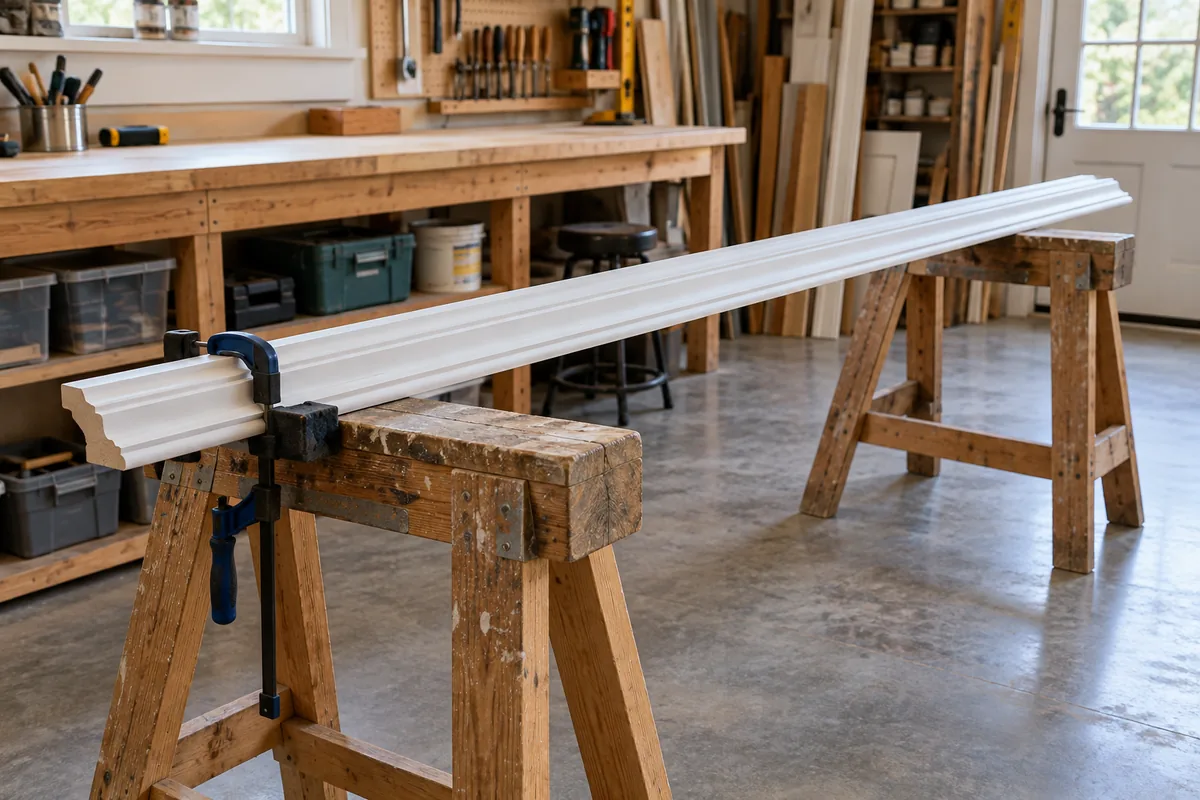
Use a stable work surface and supports appropriate to the tool, material and length. Follow the equipment manufacturer's instructions. Improvised stacks of loose objects can shift, and a chair that happens to be the right height is not automatically a suitable outfeed support.
Support without changing the shape
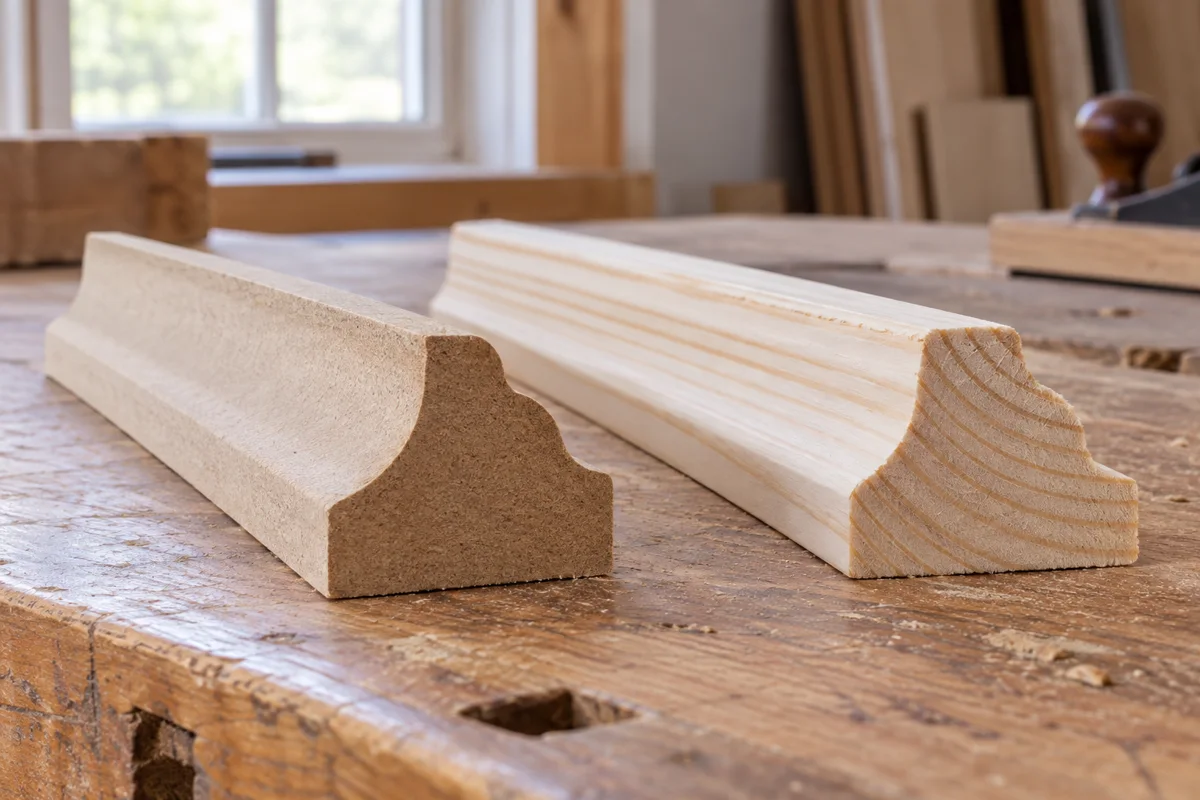
The goal is to hold the molding in its intended orientation, not bend it until it appears straight. Check the contact points and make sure the profile is not resting on a delicate bead. A shaped board may need a suitable support method rather than being laid on whichever surface looks broadest.
Clamps should hold securely without crushing or marking the face. Protective pads can help when appropriate, but they do not correct a badly placed clamp or a thin edge carrying too much pressure. Test the arrangement on a short sample before putting a finished length at risk.
Keep clamps clear of the tool's required operating area. Their position, the workpiece and the operator all need to remain compatible with the manual. Do not assume that adding another clamp makes an unsafe setup safe.
Think about the next stage too
Dry fitting can require temporary support while the neighboring piece is checked. Use a controlled arrangement that cannot fall into a walkway. A board balanced against a wall may look harmless until someone opens a door or catches an end.
Painting loose trim needs its own supports. Place contact points where they will not damage the fresh finish, allow the required drying conditions and keep the pieces away from dust-producing work. Turning them too soon can leave marks even when the surface seems dry.
For very long or awkward lengths, an additional person can help with handling, but both people need a clear plan. Avoid sudden movements and communicate before shifting either end. Assistance does not replace the stable support the tool requires.
A modest investment in an organized work area can save more rework than an upgrade to a faster tool. When the material stays where it belongs, measurements, joints and coatings all become easier to judge on their own merits.