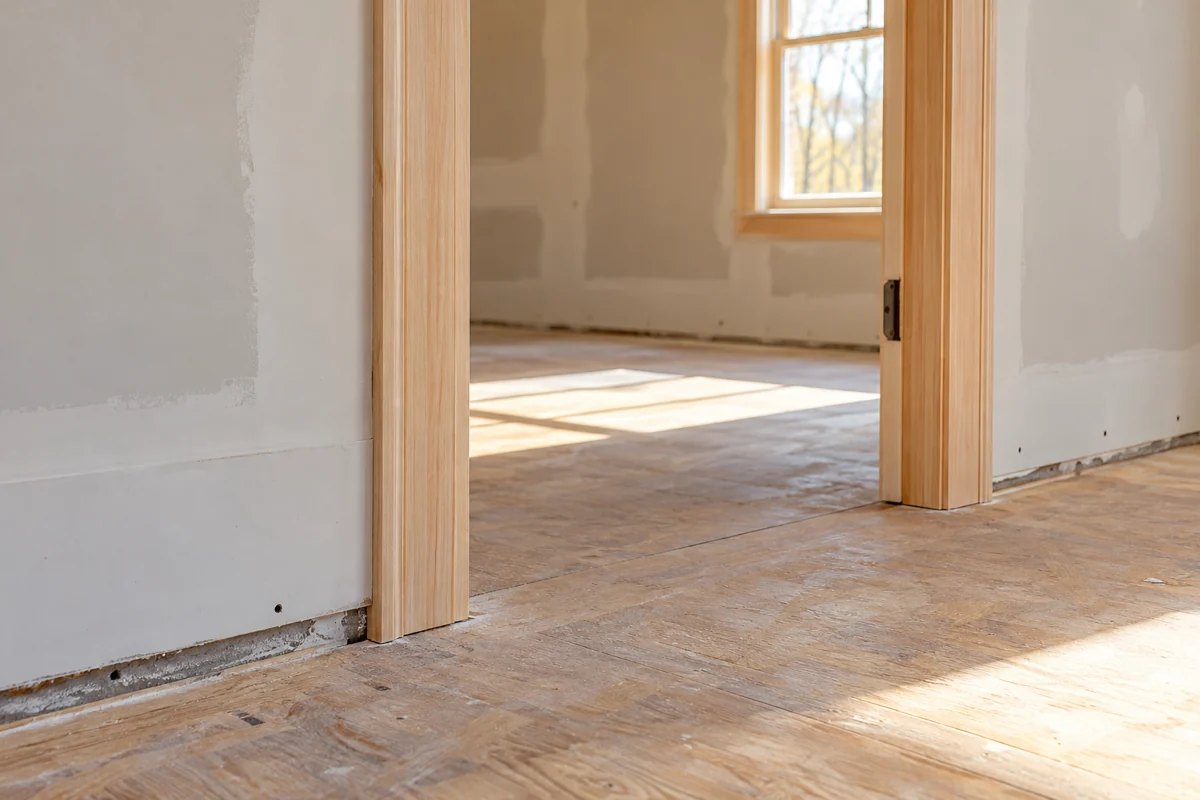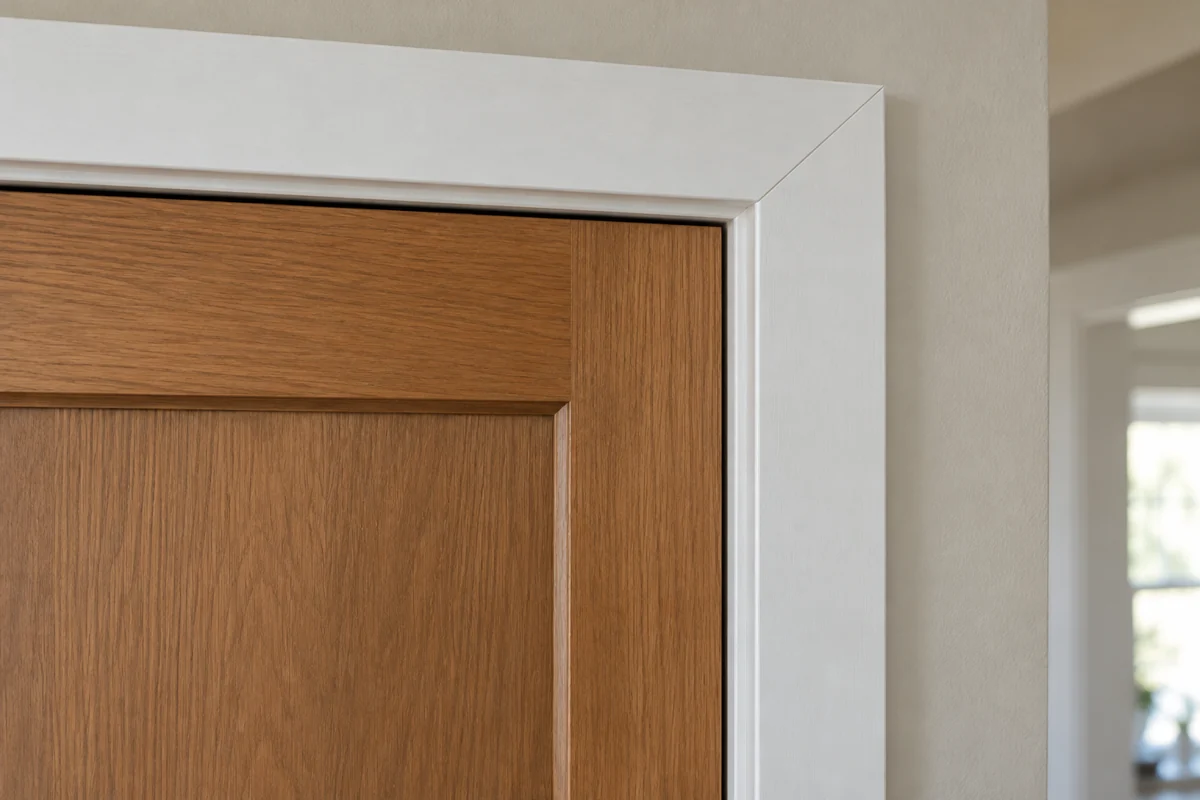
The reveal around a door is the visible margin between the edge of the jamb and the inside edge of the casing. It is easy to overlook in a design sketch and easy to notice when it changes unexpectedly. A consistent reveal gives the casing a clear relationship to the opening, even when the profile itself is simple.
Do not choose a dimension from a photograph and apply it blindly. Existing jamb details, hinges, the casing shape and the door's operation all influence the appropriate relationship. Use a real sample at the opening and confirm that the proposed trim does not interfere with moving parts.
Set a reference that can be repeated
Once the reveal is established, use a suitable reference tool or gauge rather than measuring each point independently by eye. Mark only on appropriate surfaces with a compatible method. Check the head and both legs together before fastening.
A jamb that is out of plumb or uneven may complicate the visual choice. The casing can follow the jamb and preserve a consistent reveal, but that relationship needs to be considered beside adjacent walls and other openings. For a visibly distorted opening, assessment and repair may be more appropriate than disguising it with wider trim.
At the upper corners, inspect how the profiles meet as well as the reveal. A neatly measured margin cannot compensate for an open joint or one leg sitting proud. Dry-fit the assembled relationship, including both corner pieces, before fixing one side permanently.
Keep the bottom junction in view
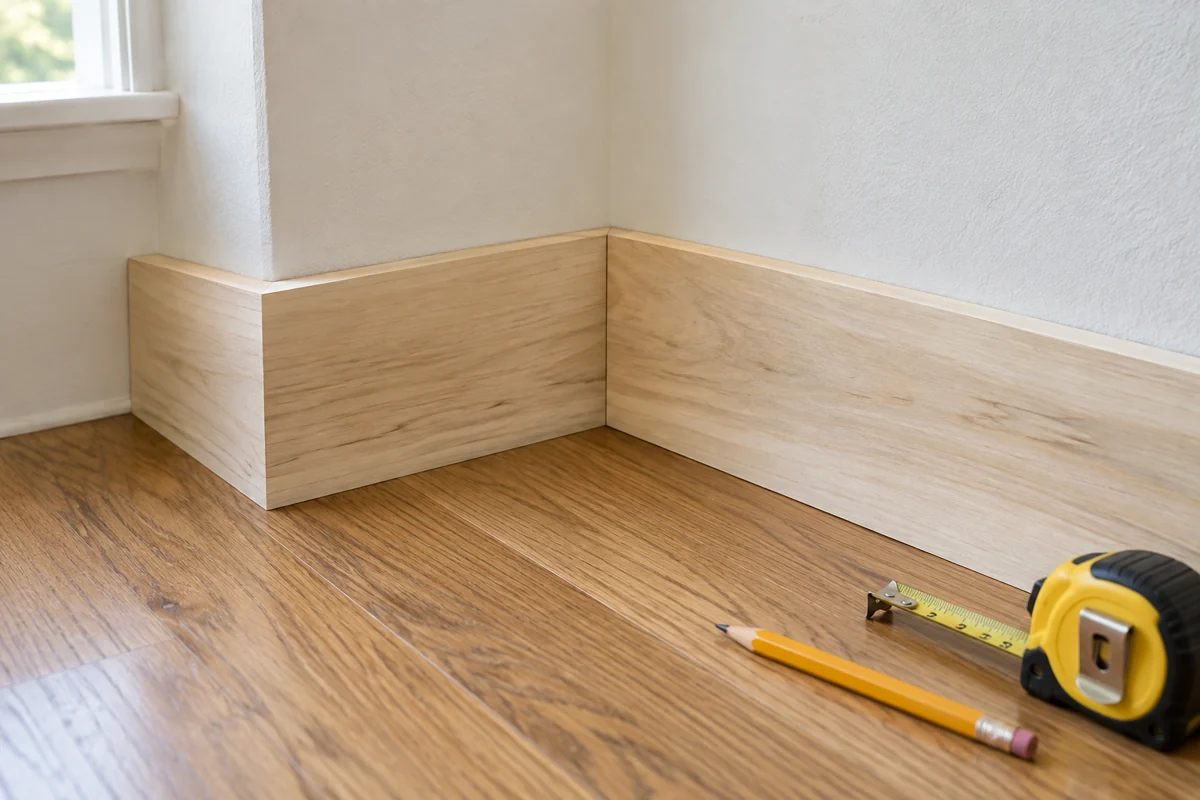
The casing must also meet the floor and baseboard. A change in thickness or a planned plinth block can affect the overall composition. Place these samples together rather than treating the top reveal as the only detail that matters.
If existing casing is being replaced, measure the area the old trim covered. A new narrower piece may expose unfinished paint or damaged wall surface. That repair belongs in the project scope; shifting the reveal unevenly to hide it is usually a poor trade.
For several doors in one room, record the chosen detail and use it consistently where the openings allow. Similar doors with accidentally different reveals can look mismatched even when their casing profiles match.
Before final paint, view the doorway from its normal approach. Check that the lines remain coherent and the door opens and closes freely. The reveal is a small detail, but it is most successful when it feels intentional enough that no visitor has a reason to think about it.