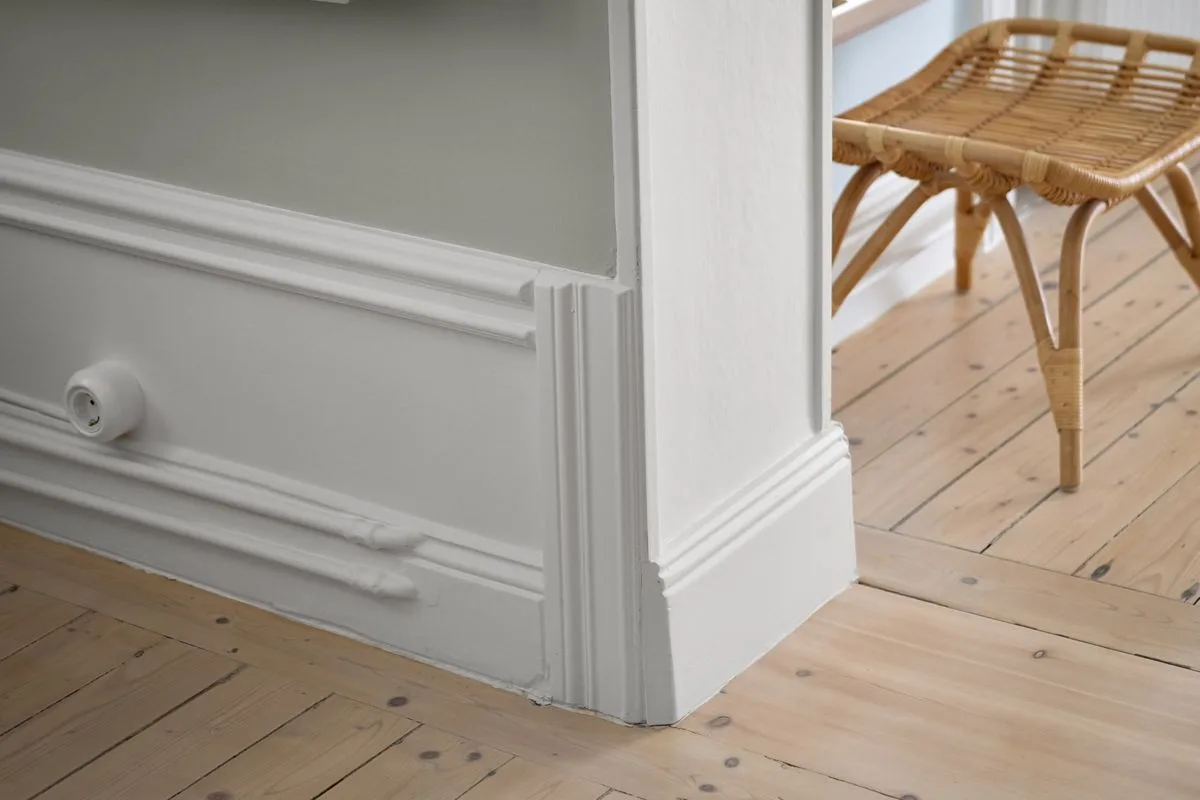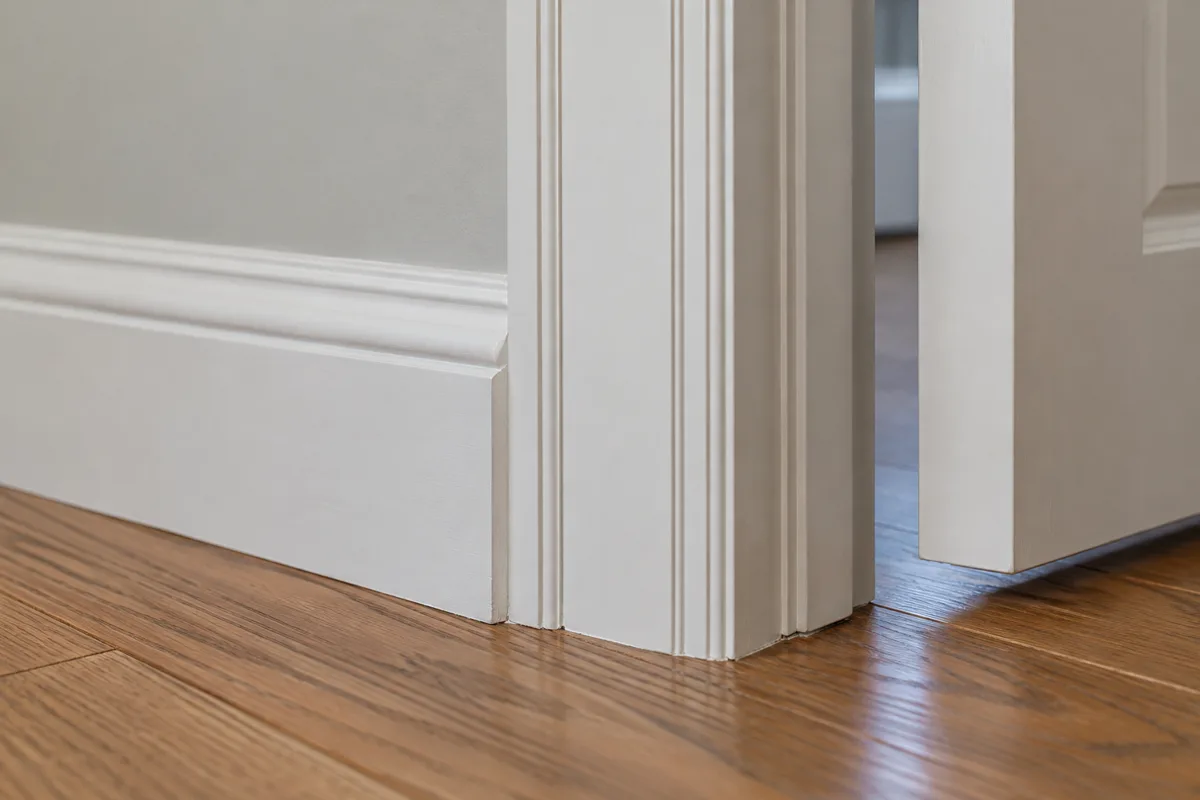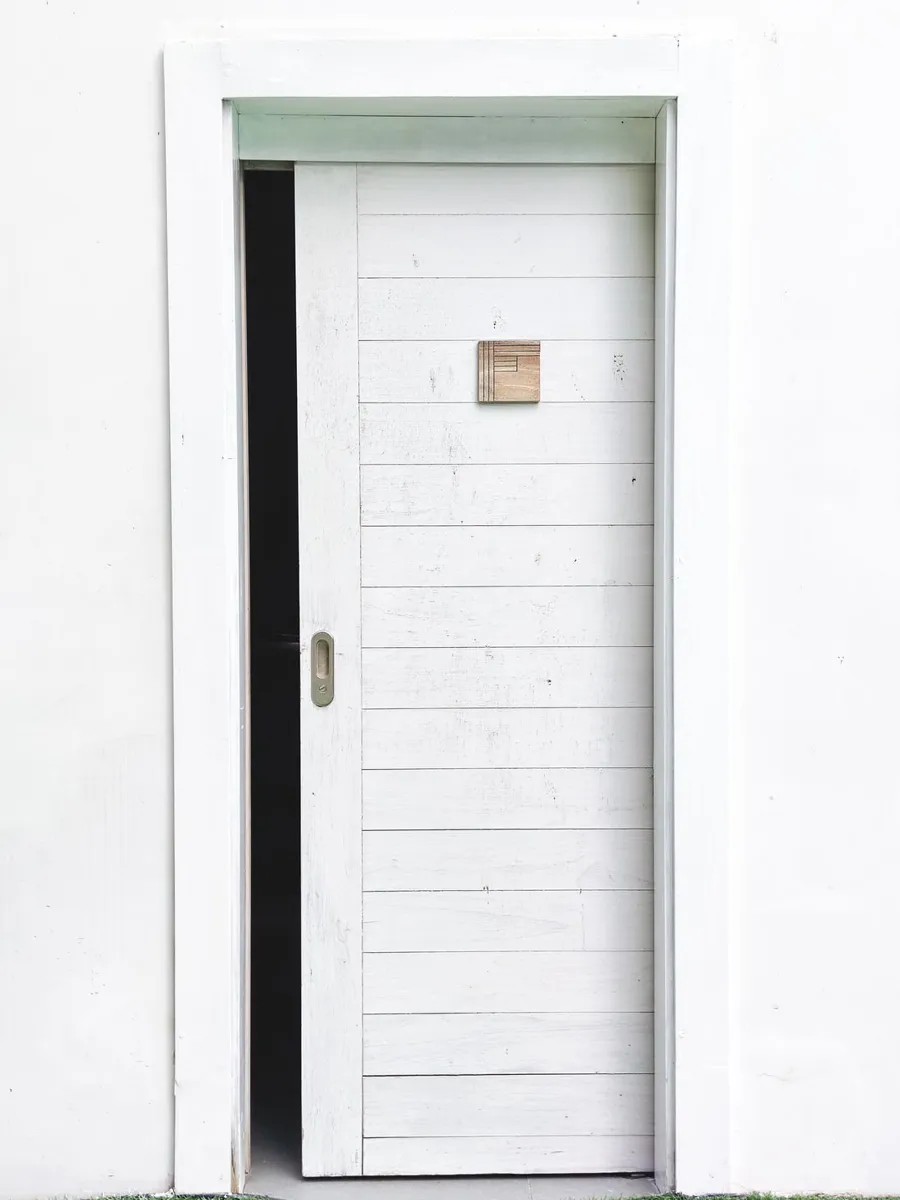
A door surround is often selected while the door is closed. Its deepest projection may only become a problem when the door opens. Handles, hinge movement, stops, and nearby walls all deserve a check before a new casing or backband is approved.
Use the actual door and hardware wherever possible. A knob, lever, and large decorative backplate do not occupy the same space. Replacement hardware can also project differently from the old set, so a future change belongs in the trim plan.
Open the door through its normal range with a sample held at the intended casing location. Do this carefully with the sample securely controlled; the purpose is to observe clearance, not to let the door strike loose trim. Check both the handle's path and the door's edge near the hinges.
Separate appearance from operation
A deeper casing may require a different stop arrangement, but that should be selected to suit the door and wall construction. Do not solve a collision by accepting a door that no longer opens usefully. If the opening serves an important access route, have any clearance concerns assessed rather than guessing.
A backband can add projection farther from the jamb than expected. Plinth blocks create another obstacle near the floor. Check those parts independently instead of assuming the main casing sample represents the entire surround.
Nearby furniture matters as well. A door that once rested flat toward a wall may now stop sooner, changing the usable space behind it. In a compact room, that can affect a dresser, closet access, or a circulation path.
Keep service access
Hinges, strike plates, and other hardware need to remain accessible for adjustment and replacement. Trim should not cover screws or trap a component. Decorative changes around specialized or rated door assemblies may have additional requirements; follow the assembly documentation and obtain qualified advice where needed.
Record the approved profile depth along with width. A later substitution with the same face width can still create a new collision if it projects farther.
This check takes very little material: a representative offcut at the top, side, and floor-level detail is usually enough to expose the issue. It is much easier to choose a compatible molding before installation than to reshape a finished doorway around a handle afterward.