Baseboard does not always run into a door casing or another wall. It may stop beside a stair, at an opening, or where a different finish begins. That exposed end needs a decision before the final length is cut.
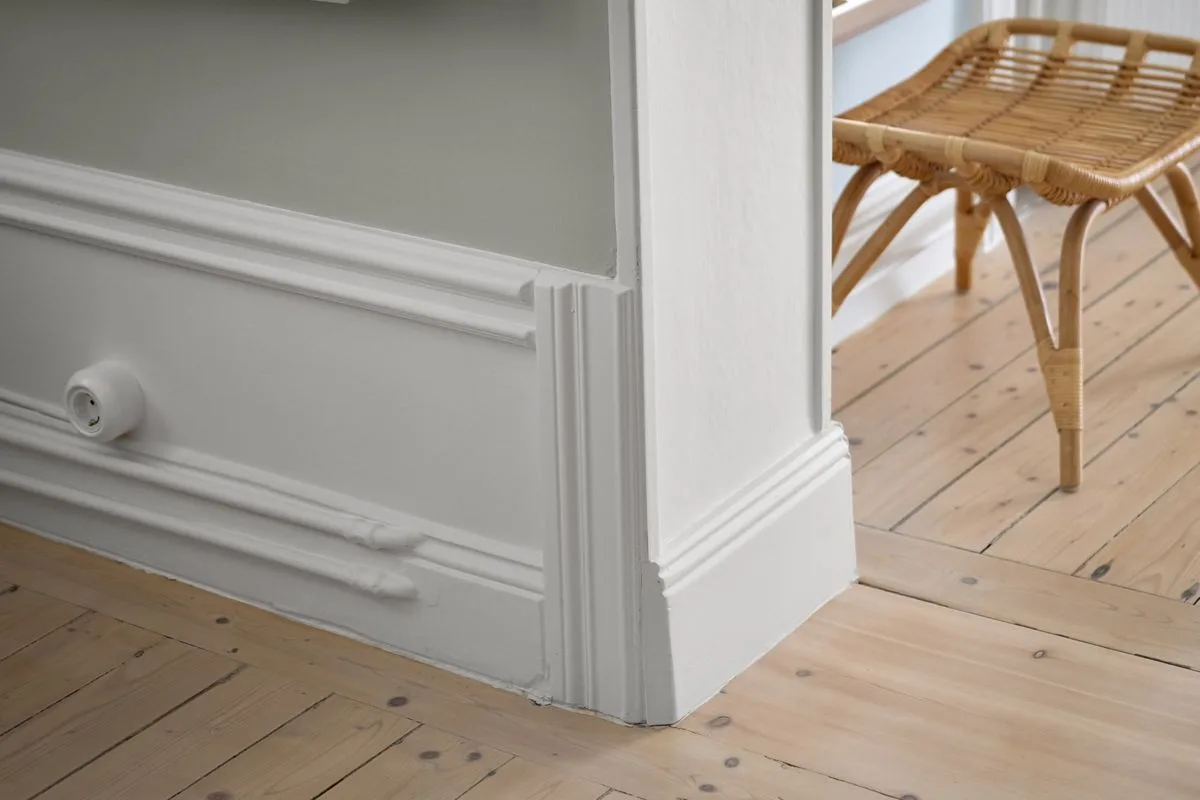
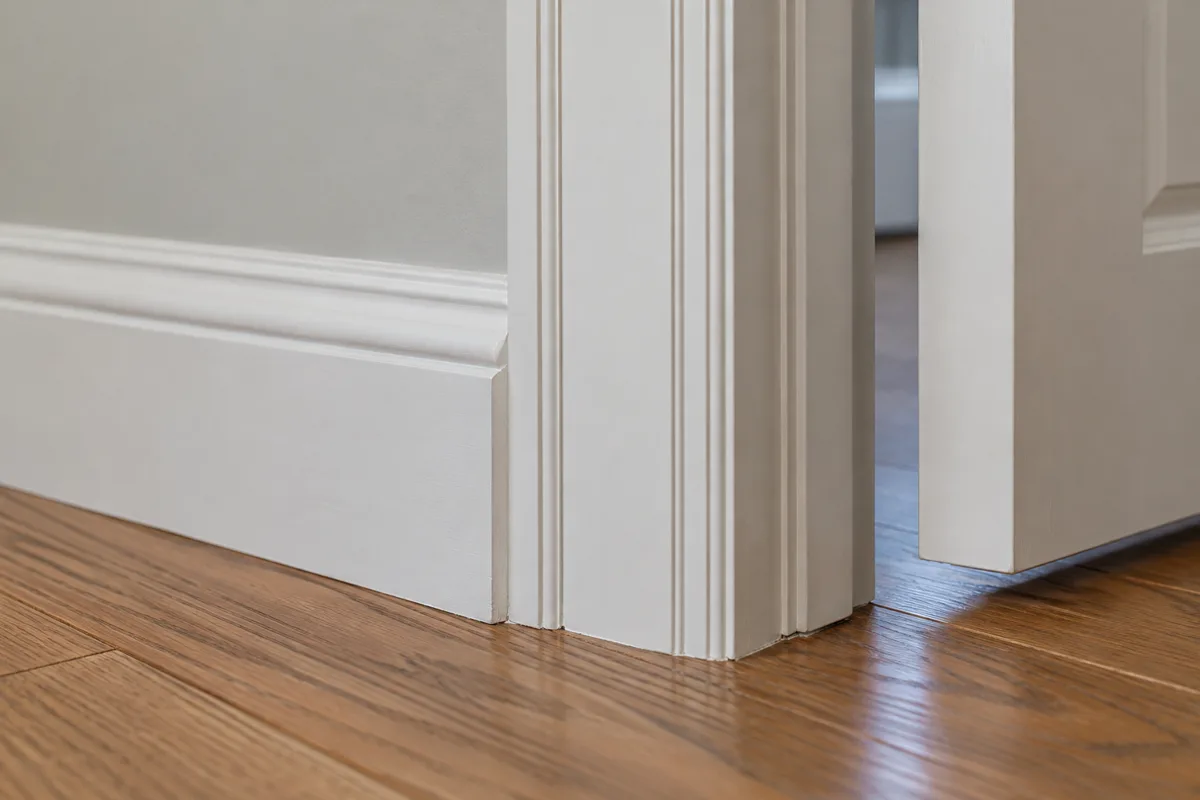
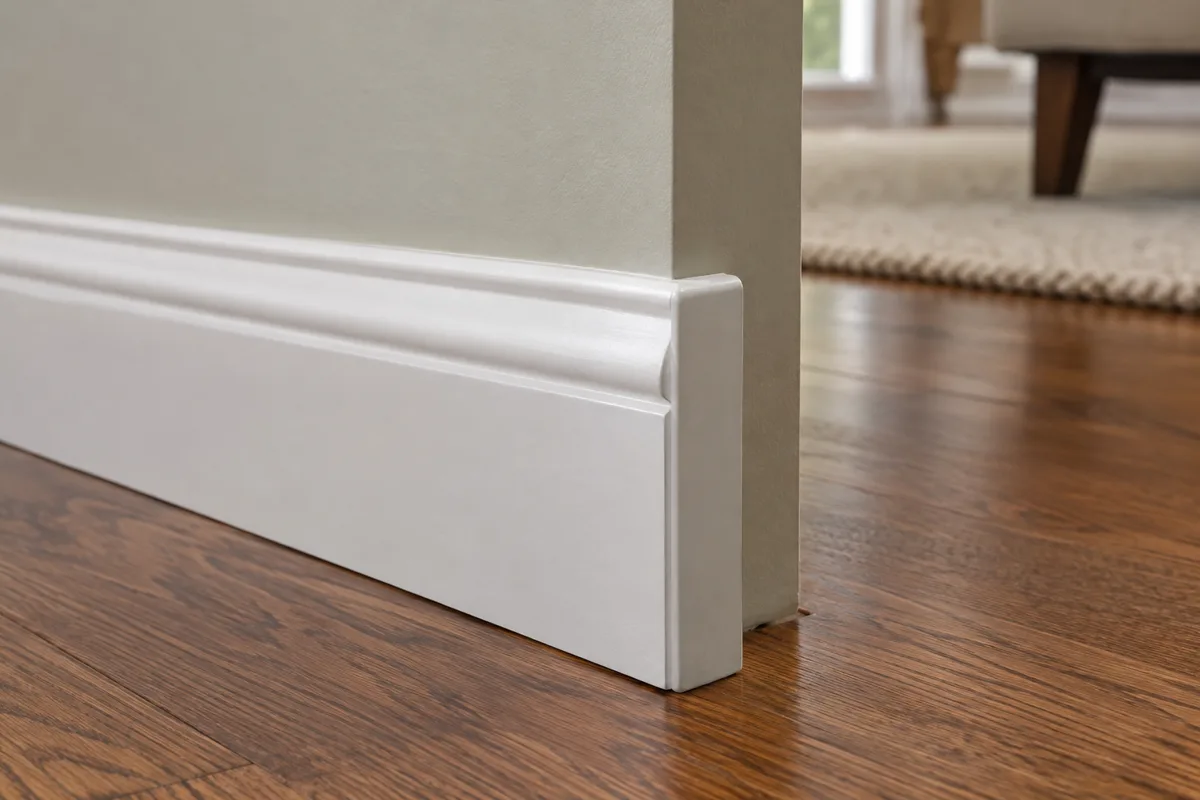
A return carries the visible profile around the end toward the wall, giving the molding a finished side. It can be an elegant answer for a shaped baseboard because the decorative lines appear to turn rather than end abruptly. A plain board may instead suit a carefully finished square end or another restrained detail.
Look at the stop from the direction people will approach it. An end hidden behind permanent cabinetry is a different situation from one beside a main passage. Do not judge only from straight in front, where an unfinished edge can disappear.
Find the reason for the stop
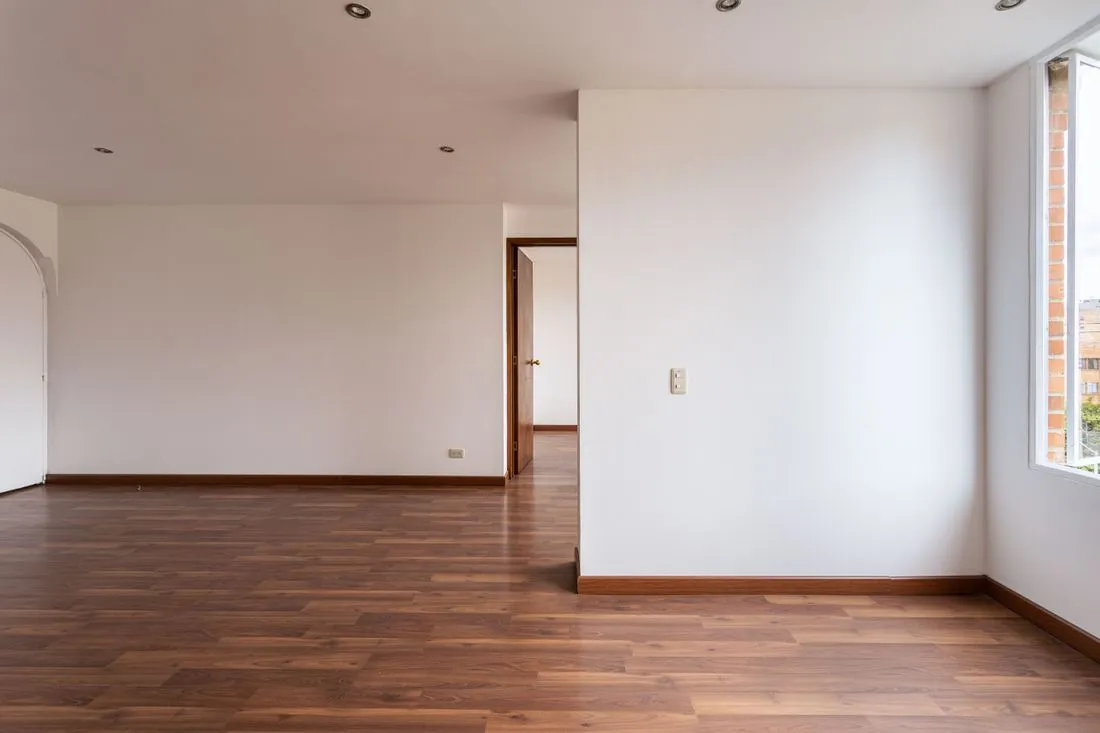
The termination should align with something meaningful: a wall change, a casing edge, or another designed boundary. A baseboard that stops a few unexplained inches short of an opening can look like material ran out.
Check the whole build-up. A base cap, main board, and shoe may each project differently. Their ends do not necessarily need identical treatment, but they must form one understandable composition. Adding a return to the cap while leaving the shoe as a blunt projection often leaves the problem unresolved.
Tiny return pieces can be fragile and difficult to handle. Plan their assembly and fixing with the installer and the material's instructions. Do not attempt unsafe hand-held cuts of small pieces simply to reproduce a detail seen in a photograph.
If the base ends beside a tiled surface, compare the two finished depths. A return may make the transition clearer, or it may create an unnecessary bump where a simple butt junction would work. A full-size corner mock-up makes that distinction easy to see.
Paint or stain every surface that remains visible, including the side edge. A matching face color with a raw end is still an unfinished detail. On stained wood, consider grain appearance before deciding that a returned profile is the best choice.
Photograph the approved endpoint and label the matching offcut. It is a small detail, but repeating it at similar stops gives the room a sense of completion without adding more decoration.