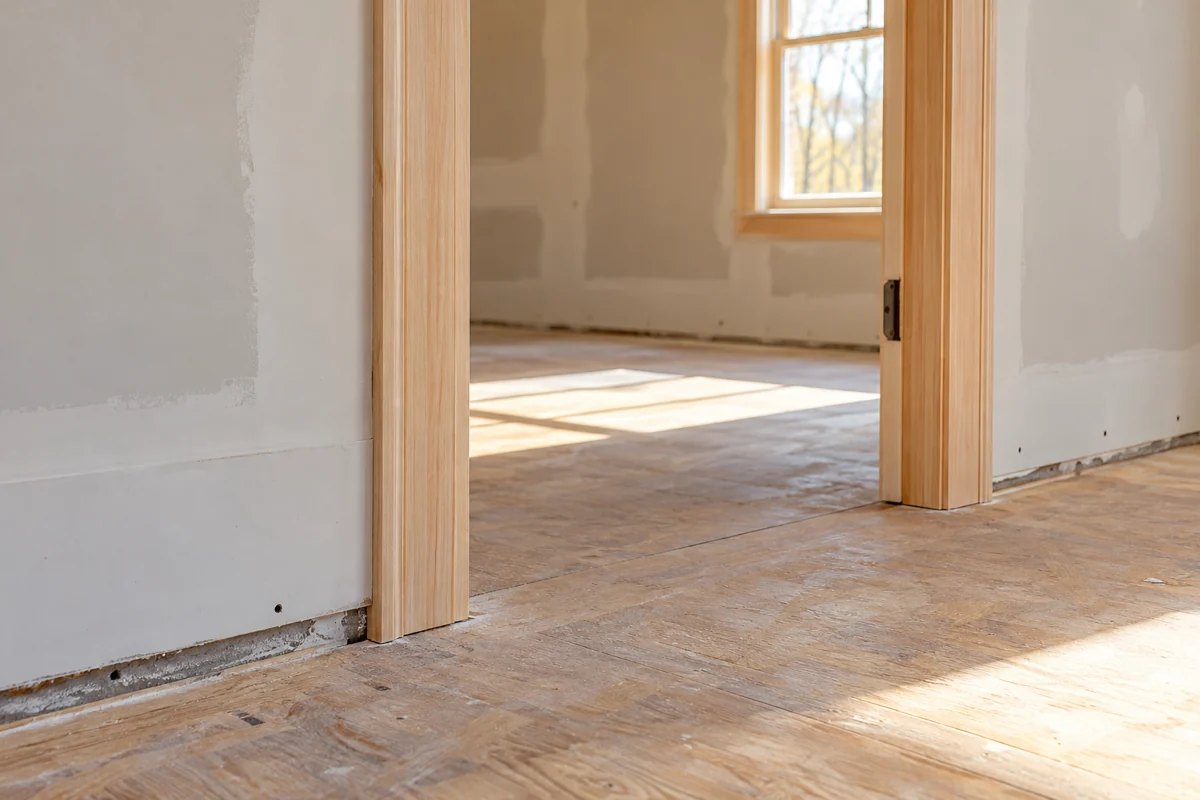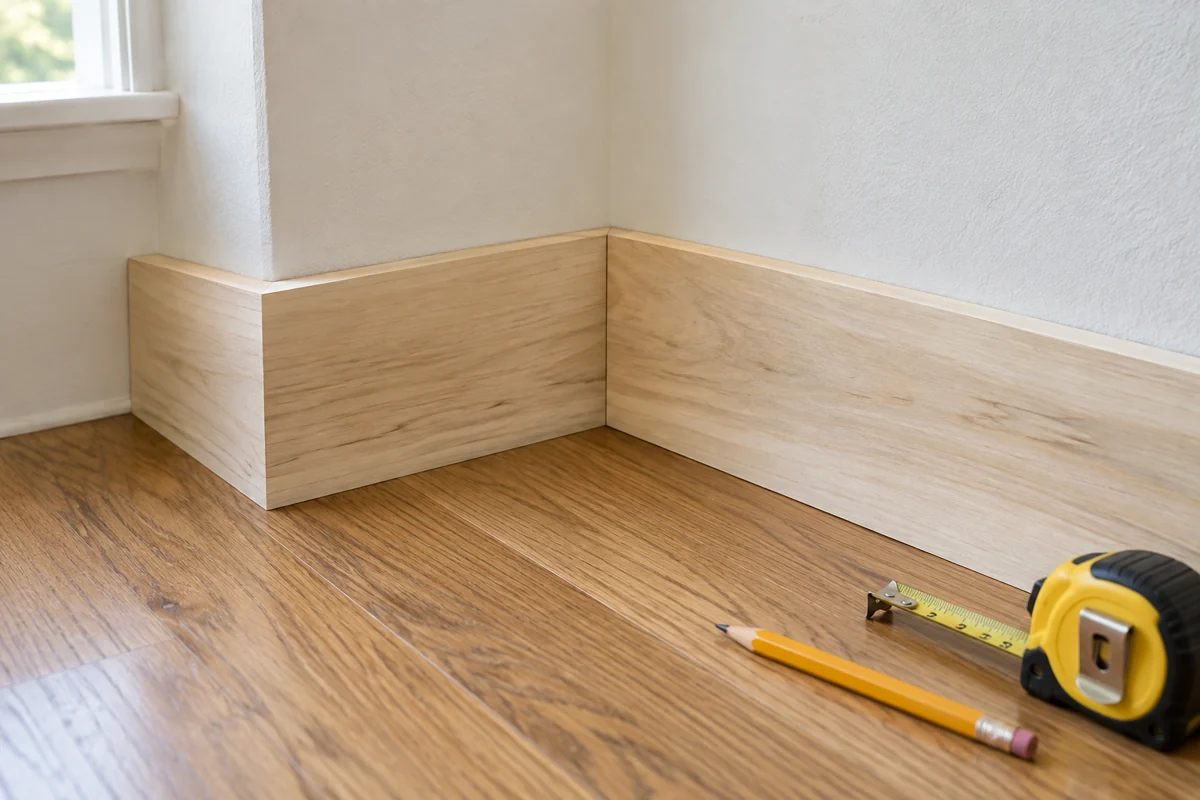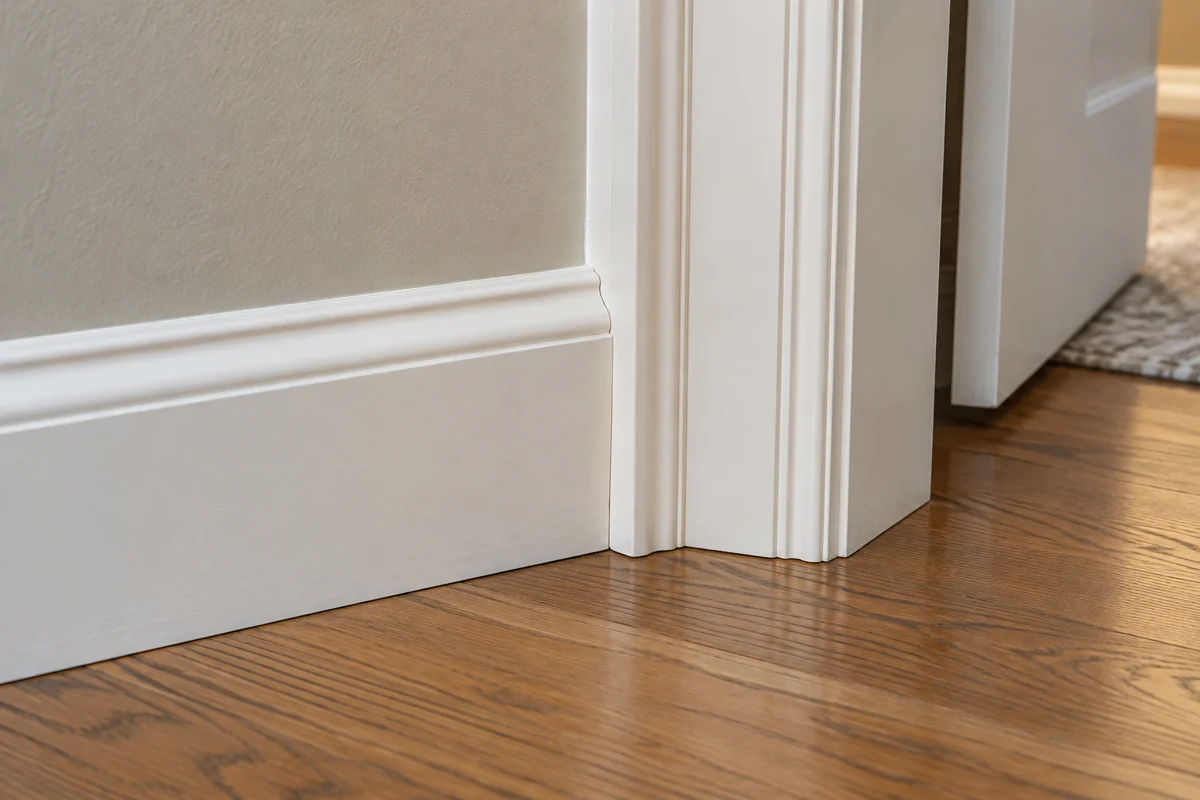
A tall baseboard and an attractive casing can each look right on their own and still meet awkwardly. The common problem is projection: the baseboard extends farther into the room than the casing at the point of contact. The resulting exposed edge can look like an unfinished interruption.
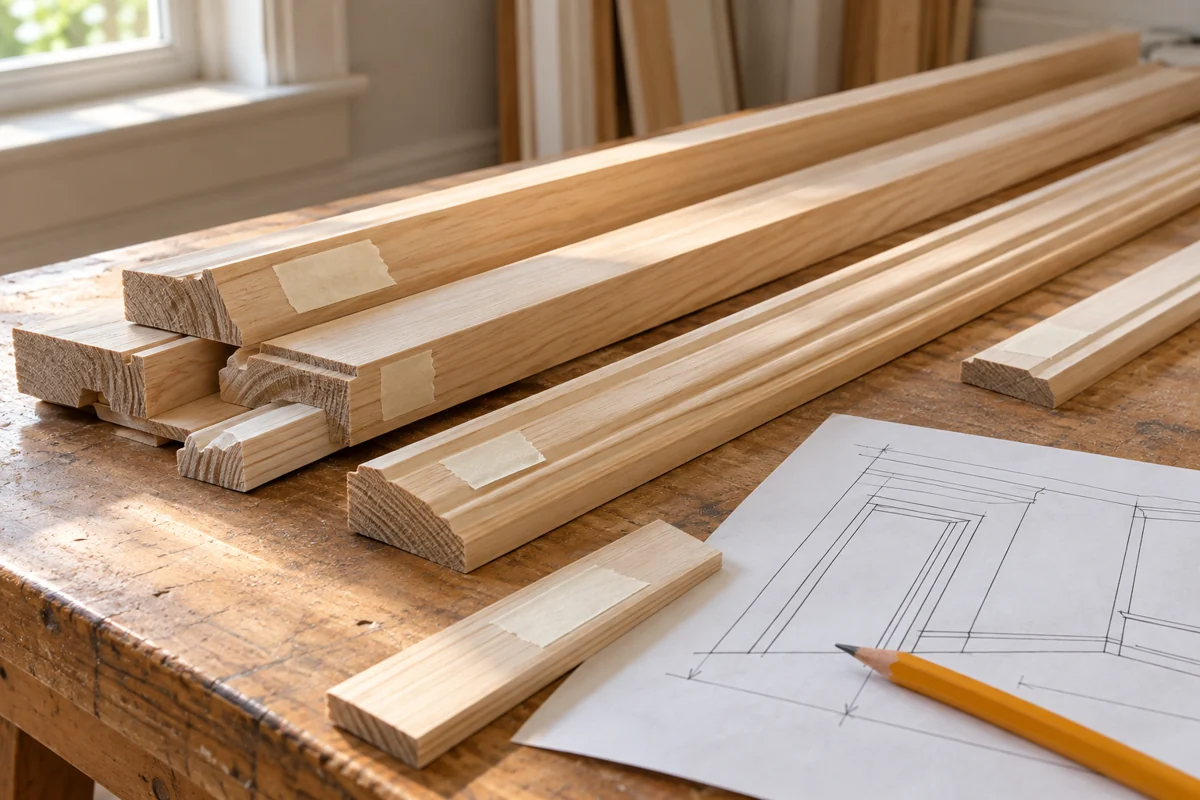
Compare actual cross-sections. Maximum thickness is not enough if the casing changes depth across its face. Place the baseboard at its intended height against the exact portion of casing it will meet. Include any separate cap or shoe molding.
Choose the junction deliberately
A casing thick enough at the meeting point can provide a straightforward termination. A plinth block may offer another intentional detail when it suits the architecture and dimensions. A return or other fitted treatment can sometimes resolve a particular profile. None should be added as an afterthought without seeing the whole doorway.
A plinth that is too narrow or too shallow can simply move the problem to another edge. Check its width, height and projection against both pieces, and consider the opposite side of the opening. A block that works in a spacious room may look crowded beside a narrow return wall.
If the existing casing must stay, let that fixed condition guide the baseboard selection. Choosing the largest baseboard first and expecting the old casing to accommodate it can create unnecessary complication.
Include the floor and the door
The finished floor level affects how the bottom details align. A new floor, a transition strip or carpet can change the visible relationship. Coordinate with the flooring requirements, especially where a floor needs perimeter movement. Do not use trim or adhesive to restrain a floating floor against its instructions.
Open the door fully during the mockup. Check clearances to the proposed projection and nearby hardware. A decorative detail should not reduce the usable opening or create a repeated impact point.
Paint can unify several pieces, but it cannot erase an unexpected step in their contours. A small full-size sample usually settles the design faster than comparing photographs of separate products. View the sample from normal standing height and from the approach to the doorway.
When replacing only part of a room's trim, decide whether the new junction should match the remaining openings or establish a clearly bounded change. Repeating one coherent detail is usually calmer than inventing a different patch at each door.
Once chosen, record the component profiles together. Future orders need the combination, not just the baseboard number. The meeting is where the materials reveal whether they were selected as a system.