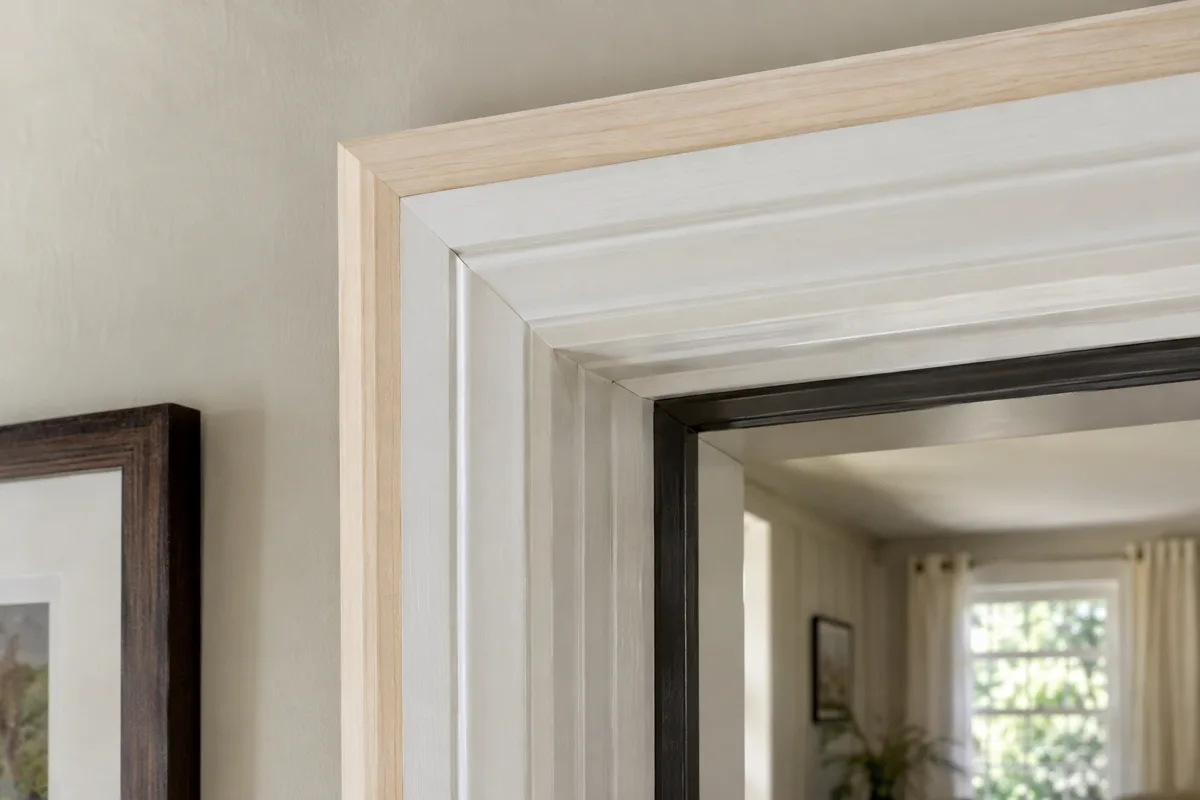
A backband adds another edge around the outside of a casing. Many profiles include a recess that overlaps the casing's edge, allowing the new molding to form a deeper or wider perimeter. The effect can be subtle: a plain surround gains a stronger shadow without replacing every piece.
It is tempting to treat a backband as a universal answer when baseboard projects beyond existing casing. Sometimes it helps. But the actual profile must cover the required relationship, and the added depth must remain compatible with the door, wall, and adjoining trim.
Measure the overlap
Take a sample to the existing casing rather than comparing dimensions on a screen. Check the recess, the depth of the outer face, and the width added to the surround. If the backband cannot sit properly against the existing edge, a line of filler will not turn it into a well-fitted profile.
Old casing may have paint buildup, rounded edges, or a shape that is unsuitable for the proposed band. Assess those conditions before planning surface preparation, particularly in an older home where coatings may need professional evaluation. Do not assume every decorative edge can safely be sanded into a new shape.
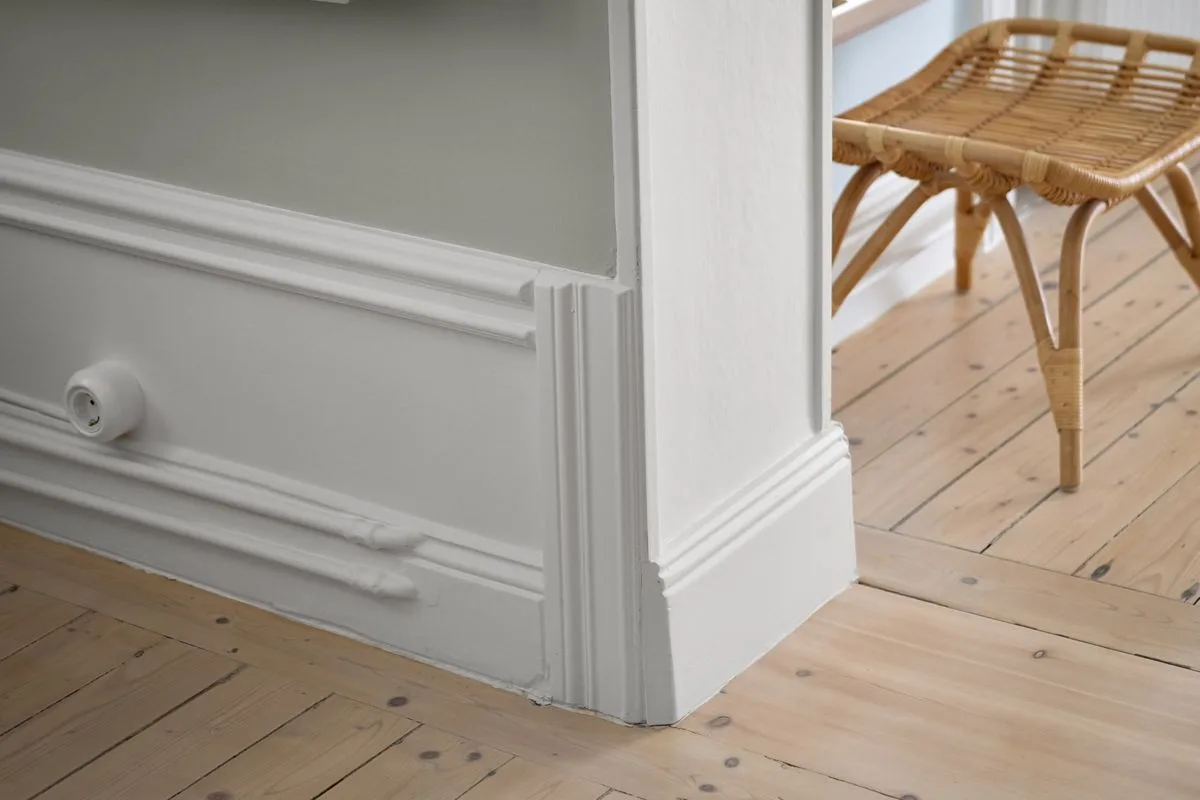
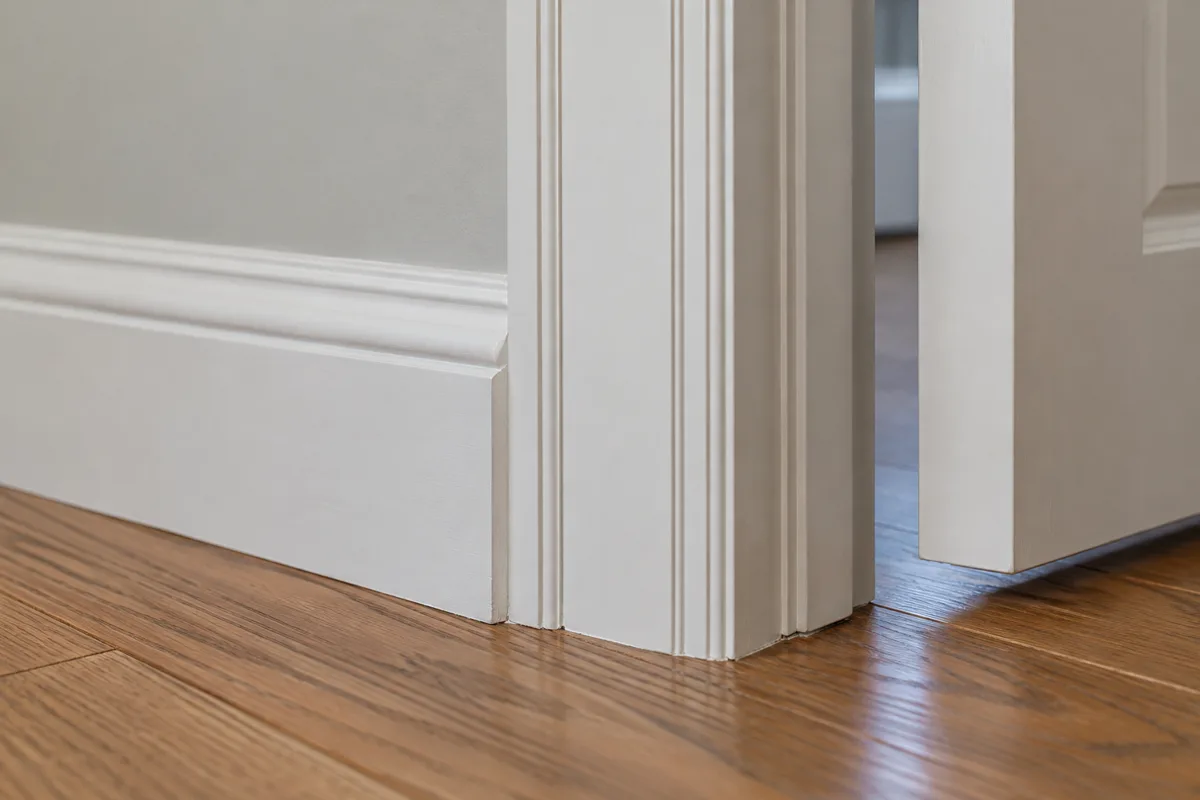
At the bottom of the doorway, bring in the baseboard sample. The added band must arrive at a resolved endpoint. It might terminate at the floor, meet a plinth, or follow another clearly drawn detail. A band that stops unpredictably above the baseboard looks like an interrupted repair.
Look beyond the problem corner
The band will travel around the whole opening, including the head. That can bring it close to a ceiling, another door, or a light switch. Check those locations even when the original reason for adding it was a floor-level mismatch.
The extra outline changes the room's visual density. If the casing already has several strong curves, another narrow profile may produce more stripes than depth. A simple backband around a relatively broad, quiet casing often reads more clearly.
Mock up a top corner as well as a base junction. View both after painting or finishing the samples. If the new band looks attached rather than integrated, consider whether replacing the casing with one suitable profile would be simpler.
Keep the product reference and the cross-section drawing once selected. “Backband” describes a role, not one standardized size, and a later replacement needs to match the overlap as well as the visible face.